
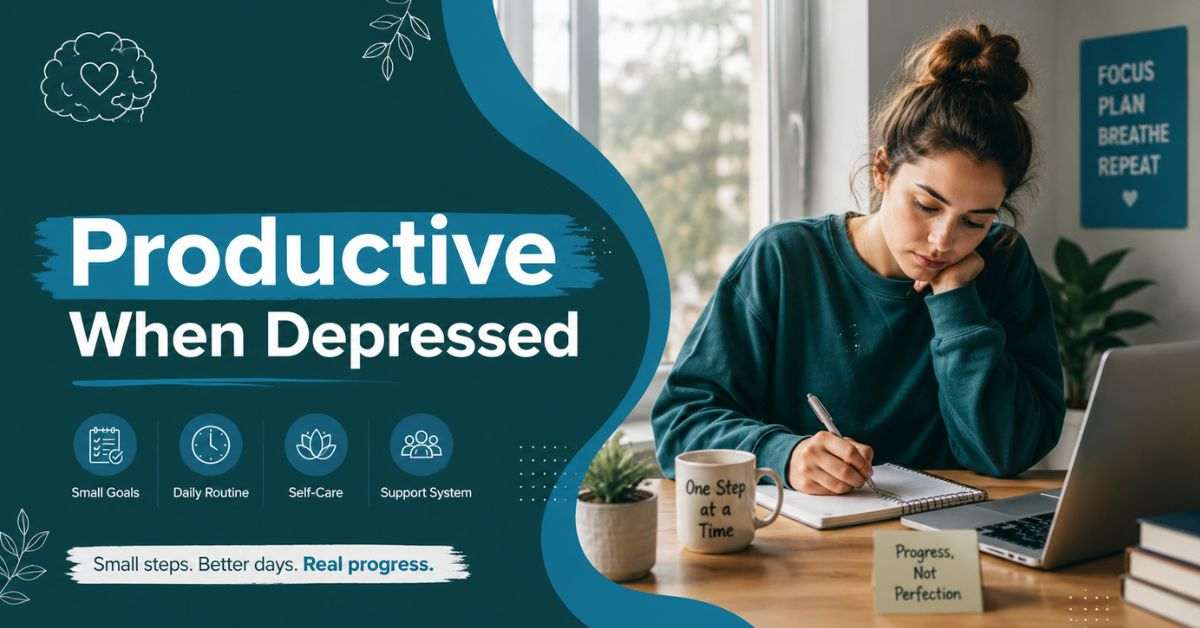

How to be productive when depressed: Yes, it is possible. You do not need to do more. You need to do what you can, one step at a time. Small tasks count. Small wins count too. Depression can make it hard to focus, start tasks, and keep up your energy levels. It can affect your mental health, daily routine, and work. The good news is that simple habits can help. Good sleep, self-care, social support, therapy, and basic time management skills can make daily life feel easier. Progress matters more than perfection.
Why Depression Makes Productivity So Difficult
Depression can make even simple tasks feel hard. It affects your energy, focus, motivation, and mood. That is why getting things done may take much more effort than usual.
Have you ever looked at a small task and felt like it was too much to handle? Many people with depression feel this way. It is not a sign of laziness. It is a common effect of a mental health condition.
Depression affects the way your mind and body work. It can lower your energy levels and make it harder to start tasks. Even things you used to do with ease may feel heavy. This is especially true for people living with Major Depressive Disorder.
Common Symptoms That Affect Daily Tasks
One of the biggest challenges is a lack of motivation. You may know what needs to be done, but still struggle to begin. Depression can also affect focus and concentration. This makes it harder to stay on track or finish what you start.
Some people feel tired all day. Others feel slowed down or mentally drained. These symptoms can affect work performance, school tasks, household chores, and daily responsibilities.
The Connection Between Depression, Motivation, and Energy
Motivation often depends on energy. When depression lowers your energy, it becomes harder to take action. The less you do, the more frustrated you may feel. Over time, this can create a cycle that is hard to break.
That is why productivity during depression looks different. The goal is not to do everything. The goal is to keep moving forward in small ways.
If depression is making daily life harder, remember that support is available. Therapy, self-care, social support, and healthy habits can help you regain focus, build momentum, and improve your emotional well-being one step at a time.
Start With Small and Realistic Goals
The best way to be productive when depressed is to make your goals smaller. Small goals feel less stressful. They are easier to start, and they help you build momentum.
When depression affects your motivation, focus, and energy levels, large tasks can feel overwhelming. You may look at a long to-do list and not know where to begin. That is why it helps to think smaller.
A small step may not seem like much, but it is often the first step toward progress. Each task you complete gives your brain a sense of success. Over time, those small wins can help you feel more confident and in control.
Break Large Tasks Into Smaller Steps
Big tasks often feel hard because they contain many smaller tasks. Instead of writing “clean the house” on your list, break it into simple actions.
For example, start by making the bed, then clear one table. Next, put away a few items. Each step feels more manageable than trying to do everything at once.
This approach can reduce stress and make it easier to stay focused.
Use the “One Task at a Time” Method
When you are dealing with depression, multitasking can make things harder. Instead of jumping between tasks, focus on one thing at a time.
Ask yourself, “What is the next small step I can take right now?” Then do only that task.
This simple habit can improve concentration and prevent mental overload.
Celebrate Small Wins Throughout the Day
Many people with depression overlook their progress. They focus on what they did not finish instead of what they did complete.
Try to notice every win, even if it seems small. Getting out of bed, answering an email, taking a shower, or finishing one task all count.
Productivity is not about perfection. It is about making steady progress. Small goals, self-care, and patience can help you move forward while protecting your mental health.
Create a Daily Routine That Supports Mental Health
A simple daily routine can make it easier to stay productive when depressed. It gives your day structure, reduces stress, and helps you use your energy more effectively.

When depression is present, days can start to feel the same. You may sleep at different times, skip meals, or put off important tasks. Without a routine, it can be harder to stay focused and manage daily responsibilities.
The good news is that your routine does not need to be perfect. It only needs to be simple and realistic. A few healthy habits can make a big difference for your mental health and emotional well-being.
Set a Consistent Wake-Up and Sleep Schedule
Sleep plays a major role in mood, focus, and energy levels. When your sleep schedule changes every day, it can make depression symptoms feel worse.
Try to wake up and go to bed at about the same time each day. This helps your body know when to rest and when to be active.
Even small improvements in sleep can help support concentration and productivity.
Build Structure Without Overloading Your Day
A routine should help you, not pressure you. Start with a few basic tasks. This might include getting dressed, eating breakfast, taking a short walk, or completing one important task.
Keep your schedule simple. Too many goals can increase stress and make it harder to stay motivated.
Include Time for Rest and Recovery
Rest is not a reward. It is a necessary part of recovery and self-care.
Give yourself time to relax, enjoy a hobby, or connect with friends and family. Social support can improve mood and help reduce feelings of isolation.
A healthy routine creates balance. It includes work, rest, movement, and self-care. With time, these small habits can help you feel more stable, focused, and productive, even during difficult days.
Practical Ways to Stay Productive When Depressed
You can stay productive during depression by using small, simple tools. Focus on tiny actions, reduce pressure, and make tasks easier to start.
When depression affects daily life, even simple work can feel heavy. This is very common in Major Depressive Disorder. The key is not to push harder. The key is to work smarter with small support tools.
You do not need big systems. You only need simple methods that help you move forward step by step.
Use Timers to Start Small
Starting is often the hardest part. A timer can help with this.
Try working for just 10 or 15 minutes. That is enough. When the timer ends, you can stop or continue if you feel okay.
This removes pressure. It tells your brain, “It is only for a short time.”
Most people find it easier to begin when the goal feels small and safe.
Reduce Distractions Around You
A noisy or messy space can make it harder to focus.
Try to keep your area simple. Put your phone away if you can. Close extra tabs on your computer. Work in a quiet corner if possible.
Small changes in your environment can help your mind feel calmer. This improves focus and reduces mental stress.
Focus on the Most Important Task
Do not try to do everything in one day. That can feel overwhelming.
Ask yourself, “What is the one important thing I should do today?”
Do only that first. If you have energy later, you can do more.
This method helps you avoid burnout. It also keeps your mind clear.
Focus on Progress, Not Perfection
Depression often makes people feel like nothing is good enough. That is not true.
A small step still counts. Sending one email, cleaning one corner, or finishing one task is progress.
Productivity is not about doing everything. It is about moving forward gently, even on hard days.
Lifestyle Habits That Can Improve Focus and Energy
Simple lifestyle habits can slowly improve focus and energy during depression. Good sleep, light movement, and healthy daily choices can support your mind and body.

When you live with Major Depressive Disorder, your energy and focus can drop without warning. This can make even small tasks feel slow and heavy. But small lifestyle habits can help your body feel more balanced over time.
You do not need big changes. Small and steady habits are enough. They support your mental health and help your day feel more stable.
The Role of Physical Activity
Movement is very helpful for the mind. You do not need hard exercise. Even a short walk can help.
Light movement can improve mood and reduce stress. It also helps your body feel more awake. Try stretching, walking, or simple home movement for a few minutes each day.
Do not aim for perfection. Just aim for consistency.
How Nutrition Affects Mental Health
Food can affect how you feel. Skipping meals can make tiredness worse.
Try to eat simple, balanced meals. Drink enough water. Avoid long gaps without food.
You do not need a perfect diet. Just try to keep your body nourished so your brain has enough energy to function.
Why Sleep Quality Matters
Sleep is very important for focus and mood. Poor sleep can make depression symptoms stronger.
Try to sleep and wake up at similar times each day. Avoid screens before bed if possible. Keep your sleep space calm and quiet.
Better sleep can slowly improve your energy levels and thinking.
Staying Connected With Supportive People
Depression can make you want to stay alone. But support matters.
Talking to someone you trust can help your mind feel lighter. It can be a friend, family member, or support group.
You do not need long talks. Even small contact can help you feel less alone and more supported in daily life.
When to Seek Professional Help for Depression
You should seek professional help when depression starts affecting your daily life, work, sleep, or relationships. If symptoms stay for weeks, support from a mental health expert can help.
Living with Major Depressive Disorder can feel heavy. Some days are harder than others. But when the sadness, low energy, or lack of interest does not improve, it is time to reach out for help.
Getting help is not a last step. It is a strong and positive choice. Early support can make recovery easier and faster.
Signs You Should Talk to a Professional
There are some clear signs that you may need support.
If you feel low most days for more than two weeks, it matters. If you lose interest in things you once enjoyed, that is also important.
Other signs include:
- Constant tiredness
- Trouble focusing or thinking
- Changes in sleep or appetite
- Feeling hopeless or stuck
When these signs start affecting your daily routine, it is time to talk to someone.
Treatment Options for Depression
Depression is treatable. You are not alone in this.
Common support options include therapy, counseling, and medication when needed. Talking therapy can help you understand your thoughts and build better coping skills.
Simple changes in routine, sleep, and self-care also support recovery.
How Professional Support Can Help You
A mental health professional can guide you step by step. They help you find what works for your situation. You do not have to figure it out alone.
Clinics like Peniel Psychiatry offer structured care, guidance, and treatment plans based on your needs.
Reaching out early can reduce stress and improve your daily life. With the right support, focus, energy, and motivation, they can slowly return.
If depression is affecting your ability to work, study, or manage daily responsibilities, professional support can help. Contact Peniel Psychiatry today to book an appointment or schedule a consultation. You can get personalized treatment options designed to help you feel better and regain control of your daily life.
Frequently Asked Questions
Can you be productive while depressed?
Yes, you can. But it will look different. Productivity during depression means doing small tasks rather than everything at once. Even tiny progress counts.
Why do simple tasks feel overwhelming during depression?
Depression affects energy, focus, and motivation. Because of this, even small tasks can feel heavy and hard to start.
How can I motivate myself when I have depression?
Start small. Do one easy task. Do not wait for motivation. Action often comes first, and motivation follows slowly.
What are the best productivity tips for people with depression?
Keep tasks small. Use simple routines. Focus on one thing at a time. Take breaks and avoid pressure. These steps help reduce stress.
When should I seek treatment for depression?
If symptoms last more than two weeks or affect daily life, sleep, or work, it is a good time to seek help.
Can therapy help improve productivity and focus?
Yes. Therapy can help you manage thoughts, reduce stress, and build better daily habits. This can improve focus and daily function over time.