
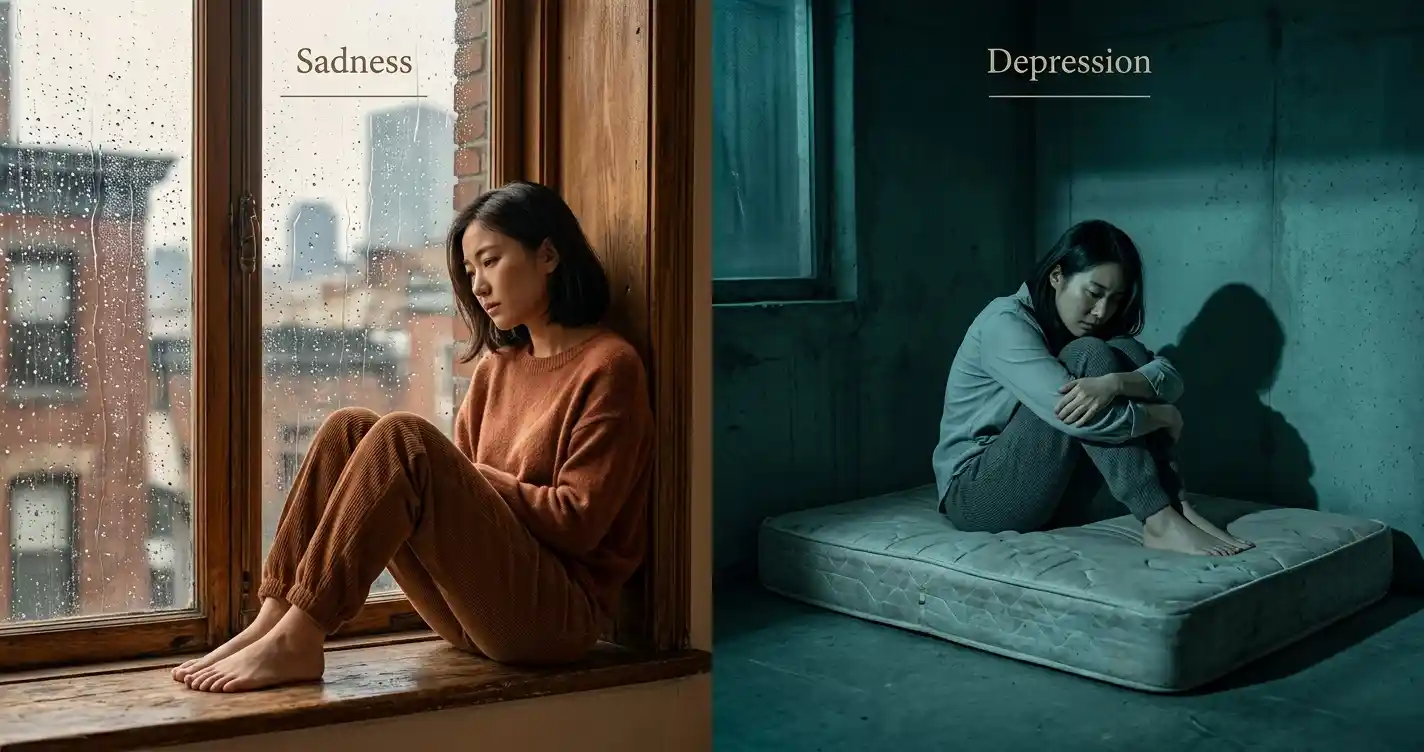

Everyone feels sad sometimes. You might feel down after a tough week at work, a disagreement with a loved one, or just one of those days when nothing goes right. That kind of sadness is a normal part of life.
But what happens when the sadness does not go away? What if it starts to affect your sleep, appetite, relationships, and ability to get through the day? That is when it is worth asking: is this still just sadness, or could it be depression?
Understanding the difference between depression and sadness can be the first step toward getting the right support. And if you are in Texas and California, Peniel Psychiatry is here to help you find answers.
What Is Sadness? (And Why It Is Normal)
Sadness is one of the most basic human emotions. It shows up when something painful or disappointing happens. You feel it when you lose someone, face a setback, or go through a hard season of life. It is your mind’s natural response to difficulty.
Sadness is not something you need to fix or eliminate. In fact, allowing yourself to feel sad is healthy. It helps you process what happened and move forward.
Common Causes of Sadness
Sadness usually has a clear trigger. Some of the most common causes include:
- Losing a job or going through financial stress
- The end of a relationship or a major life change
- Grief after losing someone you care about
- Feeling left out or misunderstood
- Disappointments at work or school
The key thing about sadness is that it is tied to a specific event or situation.
How Long Does Sadness Typically Last?
Sadness tends to ease with time. Once the situation improves or you process what happened, the feeling usually lifts on its own. You might still have hard days, but you also experience moments of joy, connection, and relief in between.
When sadness lingers for weeks without relief, that is when it starts to look a lot more like depression.
What Is Depression? (More Than Just Feeling Down)
Depression is a medical condition. It is not a sign of weakness, and it is not something you can simply snap out of. Depression changes the way your brain functions, affecting your mood, energy, thoughts, and physical health.

According to mental health experts, major depressive disorder is one of the most common mental health conditions in the United States. It affects millions of people each year, including many right here in Texas and California.
How Depression Differs From Normal Sadness
The biggest difference between depression and sadness is persistence. Depression does not need a reason to show up. It can come on without a clear trigger, and it does not lift with time the way sadness does.
Depression also affects more areas of your life. It is not just an emotional experience. It affects your sleep, appetite, concentration, motivation, and even your physical health.
Types of Depression You Should Know
Depression is not one-size-fits-all. There are several types, including:
- Major Depressive Disorder (MDD): Persistent low mood lasting two weeks or more
- Persistent Depressive Disorder (Dysthymia): A milder but long-lasting form of depression
- Postpartum Depression: Occurs after childbirth and is more severe than the typical baby blues
- Seasonal Affective Disorder (SAD): Depression that follows a seasonal pattern, often worsening in winter
- Bipolar Depression: Low mood episodes that alternate with periods of mania or high energy
A licensed psychiatric provider can help you understand which type you may be experiencing and what treatment fits your needs.
Depression vs Sadness: Key Differences at a Glance
It can be hard to tell the two apart, especially when you are in the middle of it. Here is a simple breakdown to help you understand where the line is.
Duration and Intensity
Sadness is typically short-lived. It fades as circumstances change or as time passes. Depression, on the other hand, lasts for at least two weeks and often much longer. The low mood feels constant and heavy, with little to no relief.
With sadness, you usually still have moments of happiness. With depression, even things that used to bring you joy often stop working that way. This loss of interest or pleasure is called anhedonia, and it is one of the hallmark signs of depression.
Impact on Daily Life
Sadness is painful, but it usually does not stop you from functioning. You might feel off for a few days, but you can still go to work, take care of your family, and get through your responsibilities.
Depression often makes everyday tasks feel overwhelming. Getting out of bed, taking a shower, making dinner, and even answering a text can feel like an enormous effort. If you notice that your daily functioning has significantly declined, that is a serious sign worth paying attention to.
Warning Signs That It Is Depression, Not Sadness
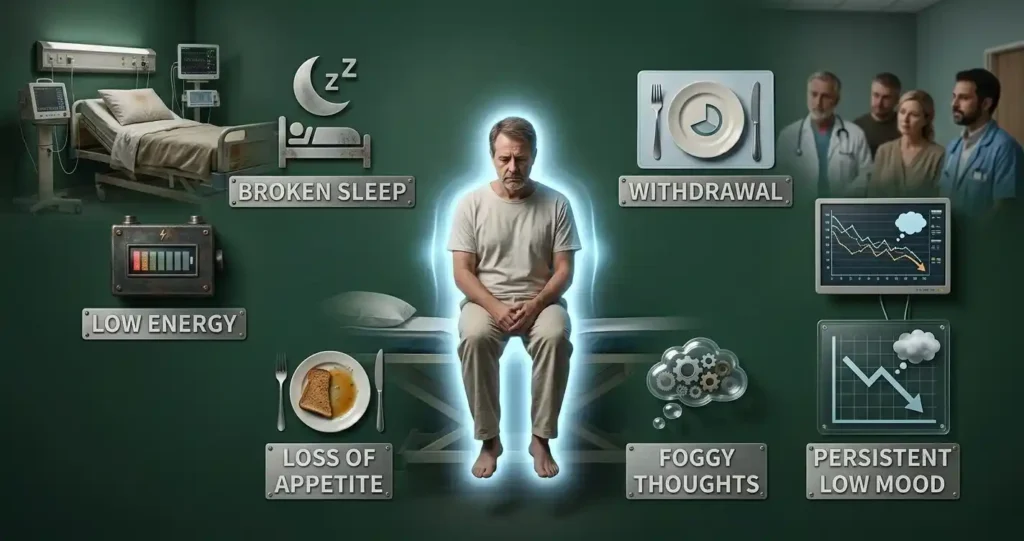
If you are unsure whether what you are feeling is depression or sadness, these warning signs can help you get more clarity. The more of these you recognize in yourself, the more important it becomes to speak with a mental health professional.
Physical Symptoms to Watch For
Depression is not just in your head. It shows up in your body too. Physical symptoms of depression include:
- Changes in sleep (sleeping too much or struggling to sleep at all)
- Significant changes in appetite or weight
- Chronic fatigue or low energy, even after rest
- Unexplained aches, headaches, or digestive problems
- Slowed movements or speech that others notice
These physical symptoms often go unrecognized as signs of depression, especially if you are not aware of the connection between mental and physical health.
Emotional and Behavioral Red Flags
On the emotional side, here are signs that point more toward depression than ordinary sadness:
- Feeling empty, hopeless, or worthless most of the time
- Losing interest in hobbies, relationships, or activities you used to love
- Difficulty concentrating, remembering things, or making decisions
- Withdrawing from friends, family, and social activities
- Thoughts of death or feeling like things would be better without you
That last point is especially important. If you are having thoughts of self-harm or suicide, please reach out for help right away. You can call or text 988 to connect with the Suicide and Crisis Lifeline, or call 911 if you are in immediate danger.
When Should You See a Psychiatrist in Texas and California?
There is no perfect moment to ask for help, and you do not need to wait until you have hit rock bottom. If you are questioning whether what you feel is more than sadness, that question alone is worth taking seriously.
Reaching out to a psychiatrist in Texas and California is a good idea if:
- Your low mood has lasted more than two weeks
- You have lost interest in things that used to make you happy
- You are struggling to keep up with work, school, or family responsibilities
- You have tried to feel better, but nothing seems to help
- You are using alcohol or substances to cope
- You are having thoughts of harming yourself or not wanting to be here
Questions to Ask Yourself Before Seeking Help
Sometimes it helps to check in with yourself honestly. Ask yourself:
- Has my mood been low for more than two weeks?
- Am I still finding joy in the things I used to enjoy?
- Is my sleep, appetite, or energy noticeably different?
- Are my relationships or work being affected by how I feel?
- Have I been isolating or pulling away from people I care about?
If most of your answers point to yes, it is time to talk to someone. You deserve support, and getting help early makes a real difference in how quickly you start feeling like yourself again.
What to Expect at Peniel Psychiatry
If this is your first time seeing a psychiatrist, it is normal to feel a little nervous. At Peniel Psychiatry in Texas and California, the goal is to make you feel heard, not judged.
Your first appointment is a comprehensive evaluation. Your provider will ask about your symptoms, your history, your lifestyle, and what brings you in. From there, you will work together to create a treatment plan that fits your life. This might include therapy, medication, or a combination of both.
How Peniel Psychiatry Helps Texas and California Residents With Depression
Peniel Psychiatry is a online mental health care psychiatric practice serving Texas and California, and the surrounding area. Whether you are dealing with depression, anxiety, bipolar disorder, or another mental health condition, the team is equipped to provide compassionate, evidence-based care.
online mental health care means you can connect with your provider from home, removing many of the barriers that keep people from getting help, such as no commute, no waiting room, and appointments that work around your schedule.
Meet Kenny Adedayo, PMHNP-BC
Kenny Adedayo is a Board-Certified Psychiatric Mental Health Nurse Practitioner (PMHNP-BC) and the provider at Peniel Psychiatry. With advanced training in psychiatric care, Kenny brings a compassionate, patient-centered approach to every appointment.
Whether you are coming in for the first time or have been managing a mental health condition for years, Kenny takes the time to understand your full picture and work with you toward meaningful, lasting improvement.
How to Book an Appointment
Booking an appointment at Peniel Psychiatry is simple. You can schedule directly through Zocdoc, which lets you see available times and confirm your appointment in just a few minutes.
If you are in Texas and California, and you have been wondering whether what you feel is depression or just sadness, do not wait. Reaching out is the first step and one of the most important things you can do for yourself.
Frequently Asked Questions
Am I in depression or just sad?
Sadness usually has a clear cause and fades within a few days. Depression has no clear trigger, lasts two weeks or longer, and affects your sleep, appetite, energy, and ability to function. If you feel empty, hopeless, or disconnected from things you used to enjoy, and it is not getting better on its own, it is worth talking to a psychiatrist. At Peniel Psychiatry in Texas and California, we can help you understand what you are experiencing and what to do next.
What are the 3 C’s of depression?
The 3 C’s of depression are Catching, Checking, and Changing your thoughts. This framework comes from Cognitive Behavioral Therapy (CBT). First, you catch the negative thought. Then you check whether it is accurate. Finally, you work to make it more balanced. A psychiatric provider can teach you how to apply this in your daily life as part of a structured treatment plan.
What is the difference between depression and ordinary feelings of sadness?
Ordinary sadness is tied to a specific event and gradually improves. Depression is persistent, often has no clear cause, and touches every area of your life, including your physical health, concentration, relationships, and motivation. The biggest clinical difference is duration and impact. Sadness lifts. Depression lingers and worsens without proper treatment.
What does sadness look like?
Sadness typically presents as crying, low mood, reduced energy, and short-term withdrawal from social activities. It is usually connected to a loss, disappointment, or stressful event. You may still experience moments of relief, laughter, or connection in between. Sadness is a normal emotional response, and most people move through it naturally with time and support.
What are 5 signs you have depression?
Here are five of the most common signs of depression to watch for:
1. Persistent low mood lasting more than two weeks
2. Loss of interest in activities you used to enjoy
3. Significant changes in sleep or appetite
4. Constant fatigue even after rest
5. Feelings of hopelessness, worthlessness, or thoughts of not wanting to be here
If you recognize several of these signs, speaking with a psychiatric provider in Texas and California, is a strong next step.
What are the 3 levels of depression?
Depression is generally categorized into three levels of severity:
1. Mild Depression – Symptoms are present but manageable. Daily functioning is mostly intact, though noticeably harder.
2. Moderate Depression – Symptoms are more frequent and begin to impact work, relationships, and daily responsibilities significantly.
3. Severe Depression – Symptoms are intense and persistent, often making it difficult to carry out basic tasks. This level may include thoughts of self-harm and requires prompt professional care.
At Peniel Psychiatry in Texas and California, we treat all three levels with personalized, evidence-based care tailored to where you are right now.