

A racing heart during anxiety is one of the most frightening symptoms people experience. Many people search for answers when their heart rate reaches 120 beats per minute or more, and they have no idea whether it is dangerous. The short answer is that an anxiety heart rate of 120 bpm is common during panic and stress episodes. It is your body reacting to a perceived threat, not your heart failing.
When you feel anxious, your brain triggers the fight-or-flight response. Stress hormones like adrenaline flood your system, and your heart speeds up fast. Your chest may feel tight, your breathing shallow, and the fear of something being wrong can make the episode worse. This page explains what is happening, when 120 bpm is normal, and how to bring your heart rate back down quickly.
What Happens During an Anxiety Attack
When an anxiety attack starts, your body reacts in seconds. Your heart rate increases, your chest tightens, and breathing becomes harder. This happens because your brain senses danger, even when there is no real threat. Doctors call this the fight-or-flight response.
Why Your Heart Rate Climbs So Fast
Stress hormones like adrenaline and cortisol tell your heart to pump faster. More blood and oxygen rush to your muscles. This is exactly why heart rate during an anxiety attack can jump to 100, 120, or even 130 beats per minute quickly. It is your body protecting you, not hurting you.
Other symptoms that may accompany it include trembling, sweating, dizziness, and tingling in the hands or feet. These usually peak within minutes and then fade as your body calms down.
Is an Anxiety Heart Rate of 120 Dangerous?
This is one of the most common questions people ask after a panic episode. Waking up or sitting at rest with a heart rate of 120 feels alarming. But for most healthy adults, an anxiety heart rate of 120 bpm during a panic episode is not medically dangerous.
Here is what the numbers mean:
| Heart Rate Range | What It Usually Means |
| 60–100 bpm | Normal resting heart rate for adults |
| 100–120 bpm | Common during mild to moderate anxiety or panic |
| 120–140 bpm | Typical range during a panic attack or intense stress |
| Above 140 bpm | Seek medical advice, especially if it stays elevated |
An anxiety heart rate of 120 is within the range your heart handles during moderate exercise. The problem is not the number itself. It is the sudden spike at rest that feels frightening. Once the anxiety passes and stress hormones settle, your heart naturally returns to its normal rhythm.
When to worry: Seek emergency help if your heart rate stays at 120 or above for more than 30 minutes at rest, if you feel chest pain spreading to your arm or jaw, or if you faint. These signs can point to something beyond anxiety.
How Anxiety Affects Your Heart Rate
A racing heart during an anxiety attack is your body’s natural stress response. Your heart is not weak or broken. It is simply your brain reacting to signals that something feels unsafe.
What the Numbers Look Like
During a panic or anxiety attack, heart rate can rise to 100, 120, or 130 beats per minute or higher. You might feel a pounding in your chest or neck, fluttering sensations, skipped beats, or chest tightness. These symptoms usually peak within a few minutes, then fade as your body calms down.
How Your Heart Returns to Normal
As anxiety passes, hormone levels drop, breathing slows, and blood flow steadies. Your heart rate gradually returns to its normal rhythm. Regular calm breathing, rest, and gentle movement can help keep your heart rate steady even when anxiety appears again.
Anxiety Attack vs. Heart Attack Key Differences
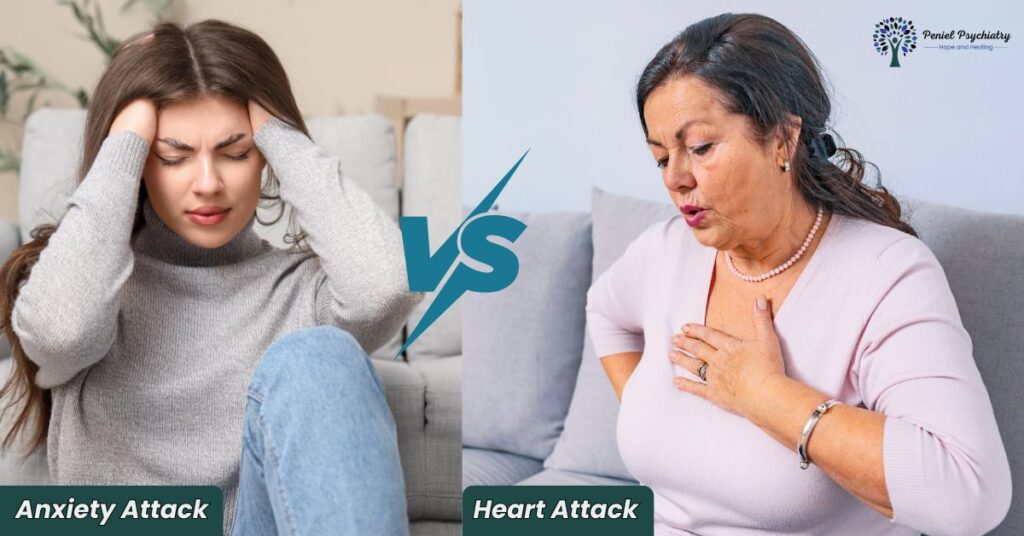
Anxiety attacks and heart attacks can feel nearly identical. Both may cause chest pain, shortness of breath, and a fast heartbeat. But the cause and danger level are very different.
How the Chest Feels
During a heart attack, chest pain feels heavy or crushing. It may spread to your arm, jaw, or back and last longer without easing up. In an anxiety attack, chest pain often feels sharp or tight and moves around. Once the anxious feeling eases, the pain usually calms down too.
How to Calm Your Heart Rate During Anxiety
When your heart rate spikes to 120 or higher during an anxiety attack, it feels scary. But simple steps can help bring it back down.
Use Breathing to Slow the Heart
Deep breathing is one of the most effective tools. Inhale slowly through your nose for four seconds, hold briefly, then exhale through your mouth for six seconds. Repeat this pattern. As your body senses safety, your pulse naturally slows.
Move Gently and Relax
Gentle movement helps release tension. Take a short walk, stretch your arms, or roll your shoulders. Avoid caffeine or nicotine during anxious moments, as both can raise your heart rate.
Ground Yourself in the Present
When panic hits, grounding helps fast. Look around and name five things you can see, four you can touch, and three you can hear. This shifts your attention away from your racing heart and signals to your brain that you are safe.
Long-Term Management of Anxiety
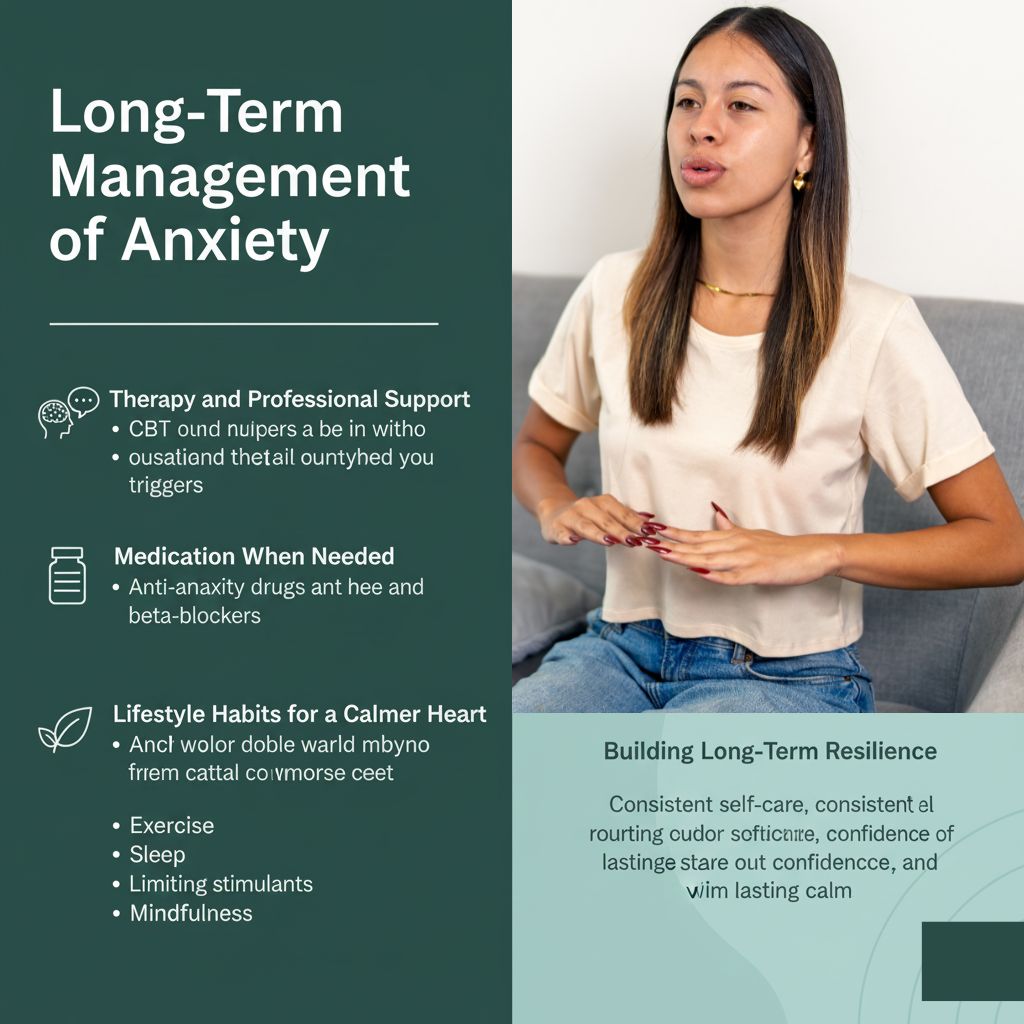
Managing anxiety over time helps your heart stay calmer and your mind clearer. Short-term coping skills help during episodes, but lasting relief comes from habits that strengthen both mental and physical health.
Therapy and Professional Support
Cognitive Behavioral Therapy (CBT) is one of the most effective approaches for anxiety. It helps you recognize triggers, challenge negative thoughts, and respond calmly when anxiety builds. People who experience heart rate anxiety attacks often find therapy helps them stay grounded.
Medication When Needed
Sometimes medication helps. Anti-anxiety medications or certain antidepressants can balance brain chemicals and reduce frequent panic attacks. In some cases, beta-blockers are used to slow a racing heartbeat in high-stress moments. Always take medication under a doctor’s supervision.
Daily Habits That Help
Regular exercise, quality sleep, and limiting caffeine and nicotine all reduce how often anxiety spikes your heart rate. Mindfulness, journaling, and deep breathing practice calm both your mind and body over time.
When to Seek Professional Help
Get medical help immediately if you have chest pain spreading to your arm, jaw, or back, or if you faint. These symptoms may suggest a heart condition rather than anxiety.
If you often experience heart rate spikes of 120 or higher during anxiety, or if panic attacks are frequent, speaking with a psychiatrist is the right step. At Peniel Psychiatry, Kenny Adedayo can assess your symptoms, suggest therapy, and recommend safe medication if needed. Early support makes a real difference.
Struggling With Anxiety? You Don’t Have to Figure It Out Alone.
If your heart races often and anxiety is affecting your daily life, it’s time to get proper support. Kenny Adedayo at Peniel Psychiatry provides telepsychiatry care for anxiety, panic disorder, and more, right from your home in Texas.
Frequently Asked Questions
Is an anxiety heart rate of 120 bpm dangerous?
For most healthy adults, an anxiety heart rate of 120 bpm during a panic episode is not dangerous. It is your body responding to stress hormones, not a sign your heart is failing. If 120 bpm persists at rest for more than 30 minutes, or is accompanied by chest pain, fainting, or pain spreading to your arm or jaw, seek emergency care immediately.
How much does anxiety raise heart rate?
Anxiety can increase heart rate by 20 to 50 beats per minute or more. During panic attacks, many people reach 100-130 beats per minute. Some hit higher. The spike is temporary and usually drops once the body calms.
How to calm a racing heart from anxiety?
Try slow deep breathing, grounding exercises, or light movement like walking or stretching. Splashing cold water on your face and avoiding caffeine can also help. Focusing on what is safe in the present moment reduces fear and naturally lowers your heart rate.
What is a normal heart rate during anxiety?
A normal resting heart rate is 60 to 100 beats per minute. During anxiety, it commonly rises to 100 to 130 bpm. An anxiety heart rate of 120 bpm is very common during panic attacks and is within the range your heart handles during moderate physical exercise. It can feel alarming at rest, but it is typically not harmful to healthy adults.
How to snap out of a panic attack?
Remind yourself that the attack is temporary and not dangerous. Focus on controlled breathing or count things around you. Grounding techniques like noticing five things you see and four things you feel help redirect your mind. Gentle movement can release built-up tension.
Can anxiety cause a permanently high heart rate?
No. Anxiety does not usually cause a long-term high heart rate. Most spikes are temporary stress responses. Regular relaxation practices, therapy, and healthy habits reduce how often they happen. A doctor should still check any persistent fast heart rate.
When should I see a doctor for anxiety-related heart symptoms?
Seek help if your heart rate stays very high, or if you have chest pain, shortness of breath, or dizziness. Even if it is anxiety, a professional like Kenny Adedayo at Peniel Psychiatry can guide you safely.