

How to stop anxiety muscle twitching is one of the most common questions people search for when their body suddenly starts acting up. You might feel your eyelid jump, your arm twitch, or your leg spasm out of nowhere. It can feel sudden and strange, but in most cases, muscle twitching anxiety is not a serious issue.
When you feel anxious, your body tenses up, and your nerves stay on high alert. This can lead to muscle spasms, minor cramps, or a shaky, restless feeling. It’s uncomfortable, but it’s your nervous system reacting to stress, not a sign that something is seriously wrong.
This guide covers why anxiety twitching happens, how to tell if stress is really the cause, what helps calm it down fast, and when it’s smart to talk to a doctor. You’re not alone, and you can take steps to feel better today.
Is Muscle Twitching Dangerous?
In most cases, no. Muscle twitching caused by anxiety or stress is not dangerous. It’s a normal physical response from a nervous system working in overdrive, similar to a racing heart or sweaty palms during a stressful moment.
Anxiety-related twitching usually:
● Comes and goes, often lasting just a few seconds at a time
● Shows up in the eyelids, hands, legs, or shoulders
● Gets better with rest, hydration, and lower stress levels
It becomes a reason to see a doctor if the twitching spreads, doesn’t go away, or comes with other symptoms like weakness or numbness. We cover the full list of warning signs later in this article.
What Is Anxiety Muscle Twitching?
Muscle twitching from anxiety can feel strange and even scary. It happens when small muscles in your body move without your conscious effort. These twitches are usually harmless, but they can be annoying or alarming if you don’t know what’s causing them.
Why Does It Happen?
When you’re anxious, your body goes into “fight or flight” mode. Your nervous system reacts to stress by sending signals through your body to prepare for danger, even when there’s no real threat.
As a result, your muscles become excited. This excitement, combined with extra adrenaline in your system, can cause small, fast muscle contractions known as fasciculations. You may feel these in your legs, arms, mouth, or even your eyelids.
Where Can You Feel Anxiety Muscle Twitching?
Muscle twitching from anxiety can show up in many places, including:
● Legs
● Shoulders
● Back
● Hands
● Eyelids
The feeling might last a few seconds or come and go throughout the day. Some people also notice twitching when they’re resting or trying to fall asleep.
Does Anxiety Really Cause Muscle Twitching?
Yes. Anxiety is a well-recognized cause of muscle twitching. These twitches are a physical symptom of anxiety, just like a racing heart or sweaty palms, and they don’t usually mean you have a serious health problem.
Still, if twitching worsens, spreads across your body, or comes with other symptoms like weakness or numbness, it’s a good idea to consult a doctor. This helps rule out other potential causes, such as muscle fatigue, magnesium deficiency, or a neurological issue.
In most cases, though, this is your body’s way of saying it’s overwhelmed and needs a break.
Why Anxiety Causes Muscle Twitching
When you feel anxious, your body enters a state of alertness known as the fight-or-flight response. This is how your nervous system prepares you to deal with stress or danger. During this response, your muscles tense up, which can cause the small twitches or spasms you notice in different parts of your body.
Nerves Become Overactive
Anxiety makes your nerves overstimulated. When nerves send too many signals to your muscles, you feel those quick, involuntary twitches. This is a common physical symptom linked to stress and anxiety.
Some people also notice sudden body jerks due to anxiety, especially right before falling asleep. These are often called hypnic jerks, and they happen when your nervous system is still winding down from a stressful day.
Effects of Sleep and Hydration
Chronic anxiety can disturb your sleep. Poor sleep makes your muscles more tired and prone to twitching. At the same time, anxiety can make you forget to drink enough water, and dehydration can cause muscle cramps and twitching on its own.
Hormones at Work
Stress hormones like adrenaline and cortisol play a major role in this process. These hormones help your body handle stress, but when they stay elevated for a long time, they contribute to muscle tension and twitching.
Anxiety affects your muscles through tension, nerve overstimulation, poor sleep, and hormone changes. Together, these factors explain why so many people experience muscle twitching when they’re stressed.
Reading this article before proceeding to the next part is an effective way to reduce your heart rate during a panic attack.
How to Tell If Anxiety Is the Cause
Sometimes what feels like stress-related muscle twitching isn’t a sign of a serious issue. Use this simple checklist to see if anxiety is behind it.
Checklist to Spot Anxiety Muscle Twitching
- Does it happen during or right after stressful moments? Anxiety’s physical symptoms often show up when you feel tense or during panic attacks.
- No severe pain, weakness, or numbness? If you feel only quick twitches without other significant issues, it’s likely stress-related rather than a muscle disorder.
- Does it get worse with too much coffee or too little sleep? Caffeine and lack of sleep can fuel both anxiety and muscle twitching.
- Do you notice other signs of chronic stress, like restlessness or tension? Muscle twitching often shows up alongside other anxiety-related symptoms.
If most of these match your experience, anxiety is probably behind the twitching. This isn’t a medical test, though. If you have severe pain, weakness, or concerns about another cause, consult a doctor or see an online psychiatrist.
What If the Twitching Has Lasted for Months?
Anxiety muscle twitches lasting for months don’t automatically mean something serious is wrong. Ongoing stress can keep your nervous system in a constant state of alert, so twitching can come and go for weeks or months, especially during long stretches of stress. That said, twitching that has persisted for months without any letup is worth mentioning to a doctor, just to rule out other causes.
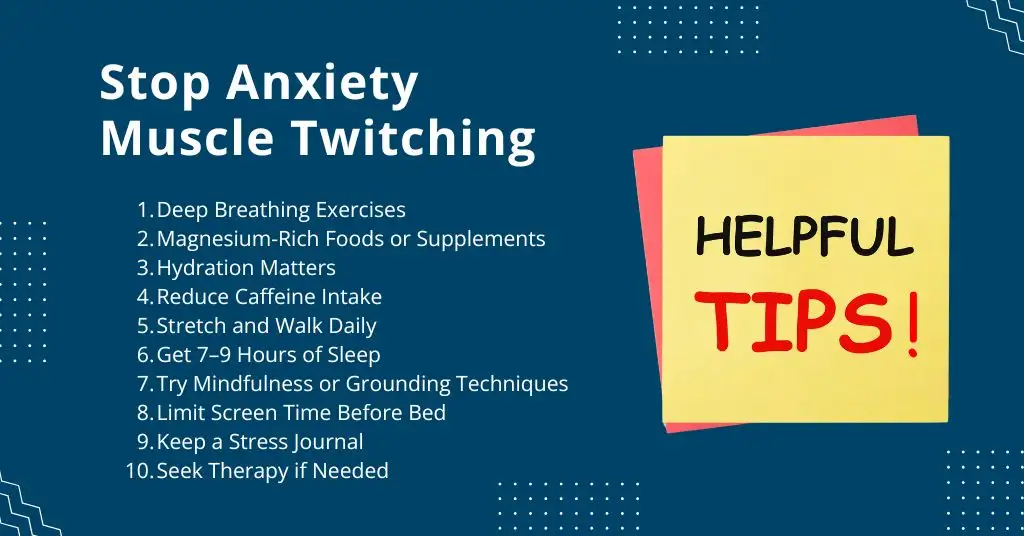
How to Stop Anxiety Muscle Twitching: 10 Helpful Tips
Here are 10 simple ways to stop a muscle twitch caused by anxiety and calm your body down fast.
1. Deep Breathing Exercises
Sit or lie down in a quiet spot. Breathe in slowly through your nose for four counts, hold for two counts, then breathe out through your mouth for six counts. Repeat five times. This helps lower muscle tension and eases stress.
2. Magnesium-Rich Foods or Supplements
Magnesium helps muscles relax. Eat spinach, pumpkin seeds, or almonds, or ask about magnesium citrate or glycinate supplements. Talk with a doctor before adding any new supplement, especially if you suspect a magnesium deficiency.
3. Hydration Matters
Your muscles need water to work well. Carry a bottle of water and sip often, aiming for at least eight cups a day. Dehydration can cause cramps and muscle fatigue, and keeping fluids up can reduce twitching.
4. Reduce Caffeine Intake
Too much caffeine can make your nerves jumpy. Swap coffee for decaf or herbal tea, and choose water over energy drinks. Cutting back on caffeine can lower involuntary muscle movements.
5. Stretch and Walk Daily
Take short breaks to stand and stretch every hour. Reach your arms overhead and roll your shoulders. A quick five-minute walk helps blood flow and eases tight muscles.
6. Get 7–9 Hours of Sleep
Poor sleep can worsen anxiety and muscle tension. Set a bedtime that lets you get enough rest, and build a calm bedtime routine, such as reading or gentle stretching.
7. Try Mindfulness or Grounding Techniques
Sit quietly and focus on the present moment. Notice the feeling of your feet on the floor or the rhythm of your breath. Mindfulness practices like this help calm the nervous system and reduce the muscle tension that often triggers twitching.
8. Limit Screen Time Before Bed
Avoid phones or computers close to bedtime, since blue light can affect sleep. Try to stop using screens at least an hour before bed, and read a book or listen to soft music instead.
9. Keep a Stress Journal
Write down worries before bed, noting the time, what you felt, and how your body reacted. Over time, this can reveal patterns between anxiety and muscle twitching.
10. Seek Therapy if Needed
Talking with a mental health professional can help you manage chronic stress. Therapists offer tools such as cognitive-behavioral therapy and relaxation exercises, and getting help early can reduce anxiety symptoms and related muscle spasms.
Use these tips to ease muscle twitching and calm your body. Share what works best for you and help others find relief, too.
When to See a Doctor for Muscle Twitching
Most muscle twitches caused by anxiety are harmless and go away on their own. However, twitching can sometimes signal a more serious underlying problem, so it’s important to know when to seek medical help.
Signs You Should Get Checked
If other symptoms accompany your muscle twitching, it’s a good idea to consult a doctor. Watch out for:
● Muscle weakness that doesn’t go away
● Slurred speech or trouble talking clearly
● Severe fatigue or feeling very weak
These symptoms might mean there’s more going on than anxiety, and could point to a nerve or muscle condition that needs treatment. Even if you’re unsure, it’s better to get checked; a healthcare professional can help determine if your twitching is linked to anxiety or something else.
If you notice these warning signs or your twitching worsens, book an appointment with us today.
Quick Fixes vs. Long-Term Solutions
Muscle twitching from anxiety can be tough to handle. Sometimes you want fast relief; other times, you need habits that pay off over the long run. Understanding the difference can significantly improve how well you manage your symptoms.
Quick Fixes for Immediate Relief
When you feel a twitch or tension starting, quick relief can help calm your body fast. Simple breathing exercises are among the best tools, and gentle stretching or a short walk can also help relax tight muscles. These actions don’t fix anxiety, but they can stop twitches from getting worse right away.
Long-Term Solutions to Reduce Anxiety
For lasting results, build habits that support your body and mind. Good sleep helps muscles recover and nerves calm down, and regular exercise can reduce anxiety and improve muscle health. Peniel Psychiatry offers tools to manage anxiety at its root, and over time these changes can lower how often muscle twitching happens.
Helpful Resources to Get Started
If you need support, many apps can guide you through breathing exercises or mindfulness practices. Therapy services are available online and in person to help you manage anxiety long-term.
Ready to get personalized support? Book an appointment with Peniel Psychiatry today and take the first step toward calmer, symptom-free days.
Frequently Asked Questions (FAQs)
Is muscle twitching dangerous?
Usually not. Muscle twitching linked to anxiety or stress is a normal nervous system response and isn’t dangerous on its own. It’s worth seeing a doctor if it spreads, doesn’t improve, or is accompanied by weakness or numbness.
How long can anxiety muscle twitching last?
It varies. Twitching can last a few seconds at a time and may come and go for days, weeks, or even months during periods of ongoing stress. If it persists for months without improvement, it’s a good idea to check in with a doctor.
Can stress cause muscle twitching all over your body?
Yes. High stress and anxiety can cause twitching in multiple areas at once, including the arms, legs, back, and eyelids, because your whole nervous system is on high alert, not just one muscle group.
How to stop tense muscles from anxiety?
Try deep breathing exercises and gentle stretching. Regular physical activity and good sleep also help relax your muscles, and staying hydrated while practicing mindfulness can reduce overall tension.
How do you treat muscle weakness from anxiety?
Muscle weakness linked to anxiety often improves with relaxation techniques and steady exercise. Therapy can help manage anxiety at its source, and getting enough rest and eating a balanced diet supports your muscles.
Can dehydration cause muscle twitching during anxiety?
Yes. Anxiety can make you forget to drink enough water, and dehydration can lead to muscle cramps and twitching. Drinking enough fluids daily helps keep your muscles working well.
When should I see a doctor about muscle twitching?
If twitching persists, spreads, or is accompanied by weakness, numbness, or pain, it’s best to consult a doctor. These signs may point to a different health issue that needs attention.
How to deal with anxiety and muscle tension?
Practice deep breathing, progressive muscle relaxation, regular exercise, and stress-reduction techniques. Staying hydrated and sleeping well also helps ease muscle tension caused by anxiety.
How to stop annoying muscle twitches?
Limit caffeine, stay hydrated, manage stress, and get enough sleep. Gentle stretching or massage may help, and it’s worth consulting a healthcare professional if twitches persist or worsen.
How to cure anxiety twitches?
Reduce anxiety through therapy, mindfulness, medication when needed, regular physical activity, and proper rest. Addressing the root cause of anxiety often reduces or eliminates twitching.
Final Thoughts
Muscle twitches caused by anxiety are widespread. They can feel strange, but most of the time they’re harmless and manageable. Your body is reacting to stress, and with the right steps, you can ease these symptoms.
If you know someone who deals with anxiety and muscle twitching, feel free to share this post. It might help them understand what’s happening and find relief, too.
For more helpful tips and advice, consider following Peniel Psychiatry.