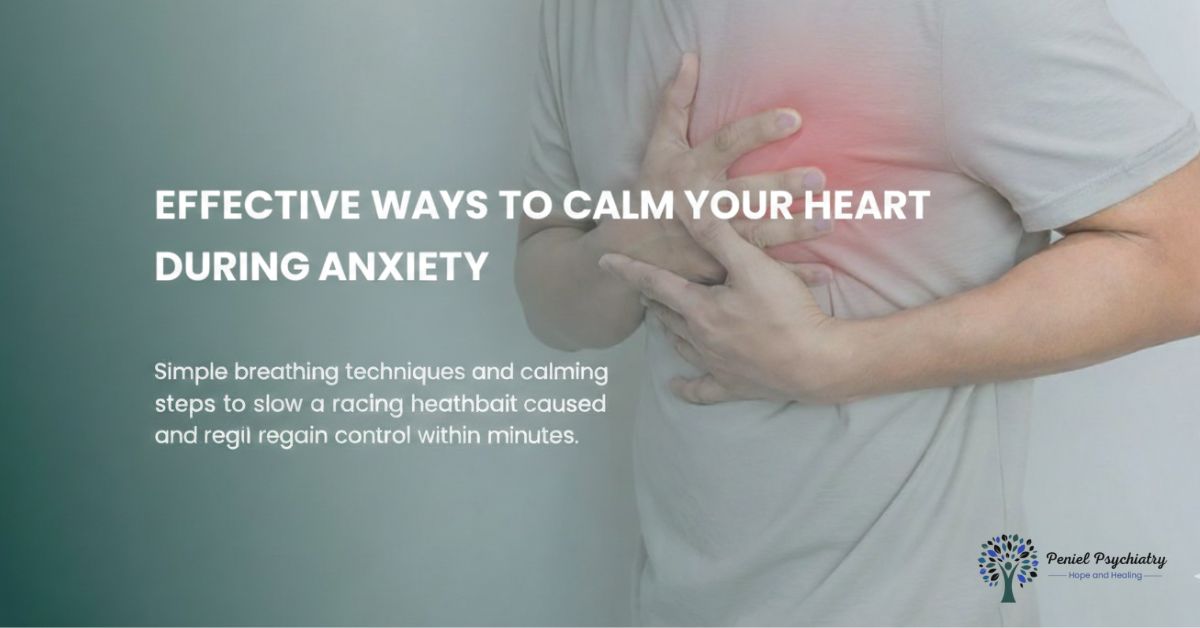

Lowering heart rate anxiety starts with calming your body and helping your nervous system feel safe again. When anxiety symptoms show up, a rapid heartbeat or heart palpitations can feel scary, but they are often part of the body’s natural stress response. The good news is that simple calming techniques, better breathing patterns, and daily stress-management strategies can slow a fast heart rate and provide relief.
Many people in McKinney, TX, experience physical anxiety symptoms without realizing how connected the mind and body really are. This guide explains what happens inside your body, why anxiety raises your pulse, and how practical relaxation techniques can help you feel more in control and comfortable again.
Understanding Lowering Heart Rate Anxiety
Lowering your heart rate during anxiety helps your body shift from a stressed state to a calm one. When anxiety symptoms appear, your nervous system reacts fast. Your heart may beat faster, your breathing may change, and your body may feel tense.
This response is normal, but it can feel frightening. The good news is that understanding what happens inside your body makes it easier to manage and safely reduce a rapid heart rate.
What Happens to Your Heart Rate During Anxiety?
When anxiety starts, your body activates the fight or flight response. Stress hormones like adrenaline are released. This causes a higher pulse and a rapid heartbeat. Your body thinks it needs to protect you, even when there is no real danger.
Many people notice heart palpitations, shallow breathing, or chest discomfort from anxiety. These physical anxiety symptoms can feel intense, but they are usually not harmful. Your cardiovascular response is simply reacting to stress, not a heart problem. Knowing this can help reduce fear and calm the mind.
Why Anxiety Causes a Rapid Heartbeat
Anxiety affects both the brain and the body. When the brain senses stress, it sends signals to the nervous system. This reduces your resting heart rate and alters your breathing pattern. The body prepares for action, even if you are sitting still.
Poor sleep, stress, and caffeine can intensify this response. Learning relaxation techniques, mindfulness practice, and simple anxiety coping skills helps regulate the nervous system. Over time, these calming techniques support better stress management and help lower heart rate and anxiety in everyday life.
Signs Your Heart Rate Is Triggered by Anxiety
Sometimes it is hard to tell whether a fast heart rate is caused by anxiety or something else. Many people become more worried when they feel their heart racing, which can make anxiety symptoms stronger. Understanding the common signs helps you feel more in control. When you know what your body is doing, it becomes easier to calm the nervous system and reduce fear around physical anxiety symptoms.
Physical Symptoms to Watch For
When anxiety affects the body, several signs can appear at the same time. A rapid heartbeat or heart palpitations are very common. You may also notice shallow breathing, body tension, sweating, or light dizziness. Some people feel chest discomfort from anxiety, which can be scary but is often linked to the stress response.
Your breathing may quicken, making your elevated pulse feel even stronger. These symptoms usually appear during stressful moments and improve once your body relaxes. Paying attention to these patterns can help you understand your triggers and respond with calming techniques instead of fear.
When Rapid Heartbeat Feels Scary but Isn’t Dangerous
A fast heart rate during anxiety often feels alarming, but it is usually your body’s normal fight or flight response. Stress hormones prepare you to react quickly, even when there is no real danger. This cardiovascular response is temporary and often resolves when you use relaxation techniques or deep-breathing exercises.
If symptoms happen mainly during stress and improve after calming down, anxiety is often the cause. Still, speaking with a mental health professional can give reassurance and help you learn safe ways to manage anxiety and keep your heart rate steady.
Quick Techniques for Lowering Heart Rate Anxiety
When anxiety appears suddenly, your heart rate can rise fast and feel overwhelming. These quick techniques help calm the nervous system and reduce physical anxiety symptoms. They are simple, safe, and easy to use anywhere. With regular practice, your body learns to relax more quickly during stressful moments.
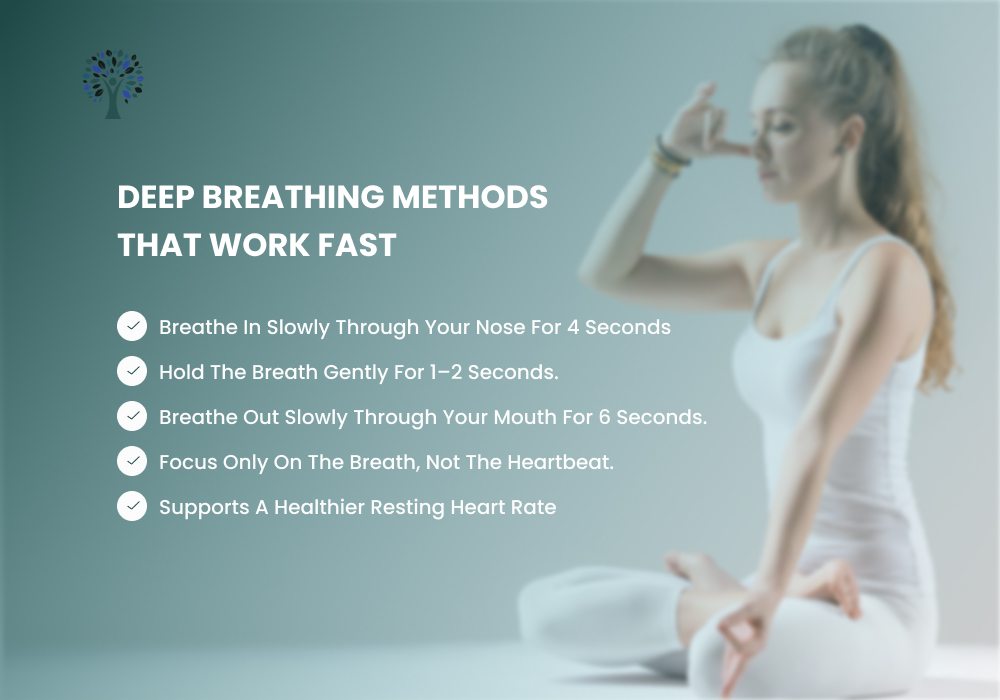
Deep Breathing Methods That Work Fast
- Breathe in slowly through your nose for 4 seconds.
- Hold the breath gently for 1–2 seconds.
- Breathe out slowly through your mouth for 6 seconds.
- Focus only on the breath, not the heartbeat.
- Helps reduce rapid heartbeat and shallow breathing
- Supports a healthier resting heart rate
Grounding Exercises to Calm the Nervous System
- Name 5 things you can see around you.
- Touch 4 objects and notice how they feel.
- Listen for 3 different sounds.
- Notice 2 smells, even soft ones
- Focus on 1 taste or sensation.
- Lowers stress response and body tension
- Helps stop fear from increasing heart palpitations
Simple Lifestyle Changes That Help Daily
Small daily habits can make a big difference in lowering heart rate and anxiety. Try reducing caffeine and sugary drinks, as they can increase a rapid heartbeat and make anxiety symptoms feel stronger. Getting enough sleep each night helps balance stress hormones and supports a calmer nervous system. Light movement, such as walking or gentle exercise, improves breathing patterns and helps release body tension.
Drinking water regularly helps maintain balance and supports overall well-being. Taking short breaks during stressful days gives your mind time to reset. Using relaxation techniques daily also strengthens anxiety coping skills and improves stress management. Over time, these simple changes work together to make anxiety easier to handle and help your body feel calmer.
Learn what triggers a heart rate anxiety attack, how your body responds, and practical tips to calm your heartbeat and reduce anxiety naturally for faster relief and comfort.
Long-Term Strategies to Manage Anxiety and Heart Rate
Managing anxiety and heart rate over the long term means building healthy habits that support both the mind and body. Quick relief techniques are helpful, but lasting change comes from consistent daily actions.
When your nervous system feels safer and more balanced, anxiety symptoms become less intense, and a rapid heartbeat happens less often. These long-term strategies help improve stress management, reduce physical anxiety symptoms, and support a calmer, more stable resting heart rate.
Therapy and Behavioral Techniques
Therapy can play a strong role in lowering heart rate and anxiety because it helps you understand how thoughts and emotions affect the body. Cognitive behavioral therapy (CBT) teaches practical anxiety coping skills that reduce fear and improve emotional control.
By learning how to respond differently to stress, your nervous system becomes less reactive. Over time, therapy helps reduce the fight-or-flight response and makes heart palpitations feel less alarming. Talking with a mental health professional also provides reassurance and guidance, which can make anxiety feel more manageable in everyday life.
Sleep, Nutrition, and Exercise for Calm Heart Health
Daily lifestyle habits directly affect your cardiovascular response to stress. Good sleep helps regulate stress hormones and supports a balanced nervous system. Healthy meals provide steady energy, which helps prevent sudden spikes in anxiety symptoms.
Regular movement, such as walking or light exercise, improves breathing patterns and reduces body tension. Limiting caffeine and practicing relaxation techniques also helps keep your heart rate steady. When these habits become part of your routine, they naturally support long-term stress management.
When Medication May Help
For some people, anxiety symptoms remain strong even with lifestyle changes and therapy. In these cases, medication may help calm the nervous system and reduce episodes of rapid heartbeats.
A psychiatrist usually prescribes medication after understanding your symptoms and overall health. It works best when combined with therapy and healthy daily routines. With professional support, many people find that medication helps them feel more stable and better able to practice calming techniques.
When to Seek Professional Help in McKinney, TX
Sometimes, anxiety and a rapid heart rate can feel overwhelming, even if you’re using calming techniques or healthy daily habits. Knowing when to seek professional help is important. A mental health expert can provide guidance, reassurance, and personalized strategies to manage anxiety more effectively.
Seeking help early can prevent symptoms from worsening and help you regain control of your body and mind. In McKinney, TX, clinics like Peniel Psychiatry specialize in anxiety care and support for physical symptoms such as a fast heartbeat or heart palpitations.
How Psychiatry Support Helps Control Anxiety Symptoms
A psychiatrist or licensed therapist can help you understand the connection between anxiety and physical symptoms. They can teach techniques to regulate your nervous system, manage stress hormones, and reduce the fight-or-flight response.
Therapy sessions guide you through deep-breathing exercises, mindfulness practice, and behavioral strategies to improve daily coping skills. With professional support, many people in McKinney, TX, notice a decrease in rapid heartbeat episodes and feel more confident in handling anxiety symptoms without panic.
Finding Local Anxiety Treatment at Peniel Psychiatry
Finding the right local support makes a big difference. Peniel Psychiatry in McKinney, TX, provides personalized anxiety care for both emotional and physical symptoms. Their team helps patients develop long-term strategies, including therapy, lifestyle adjustments, and, when needed, medication.
If you’re ready to take control of your anxiety and lower your heart rate, book a consultation with Peniel Psychiatry today and start learning practical ways to calm your mind and body.
Final Thoughts on Lowering Heart Rate Anxiety
Lowering heart rate anxiety is about helping your body and mind feel safe and calm. Rapid heartbeat, shallow breathing, and tension are common responses to stress, but they don’t have to take over your life.
Using quick techniques like deep breathing and grounding exercises can provide immediate relief, while long-term strategies such as regular sleep, balanced meals, gentle exercise, and mindfulness help regulate your nervous system over time.
Understanding how anxiety affects your body makes it easier to respond calmly. Practicing these steps consistently trains your body to manage stress naturally. Over time, combining daily habits with awareness of your physical symptoms makes lowering heart rate anxiety more manageable and helps you feel steady, safe, and in control.
Frequently Asked Questions About Lowering Heart Rate Anxiety
What causes a rapid heartbeat during anxiety?
A rapid heartbeat occurs when your body activates the fight-or-flight response. Stress hormones like adrenaline increase your pulse, even if there is no real danger. This is a natural nervous system reaction and usually not harmful.
How can I lower my heart rate quickly during anxiety?
Quick techniques include deep breathing, grounding exercises, and present-moment focus. Slowing your breath and paying attention to your senses helps calm the nervous system and reduce heart palpitations.
Can lifestyle habits affect anxiety and heart rate?
Yes. Good sleep, balanced meals, regular exercise, and limiting caffeine can reduce stress response and help maintain a calmer resting heart rate.
When should I see a professional for anxiety-related heart palpitations?
If a rapid heartbeat happens frequently, feels intense, or causes fear despite using calming techniques, a mental health professional can provide guidance, therapy, or medication when needed.
Are anxiety-induced heart palpitations dangerous?
Usually, no. They are part of the body’s normal stress response. Learning relaxation techniques and practicing stress management can make these symptoms more manageable over time.