

Anxiety disorders and eating disorders often go hand in hand, showing up together more often than most people think. Anxiety can trigger emotional eating, restrictive eating behavior, or a sudden loss of appetite, while conditions like anorexia and bulimia often deepen anxiety and worsen body image. Left untreated, this cycle can quietly take over daily life, affecting sleep, mood, and self-worth. The encouraging part is that recovery is possible. With the right support, from CBT to nutrition counseling, a board-certified provider like Peniel Psychiatry in Texas and California, can help you rebuild a healthier relationship with food.
What’s the Link Between Anxiety Disorders and Eating Disorders?
Anxiety disorders and eating disorders rarely exist in isolation. Clinically, they’re two of the most commonly co-occurring mental health conditions; research consistently shows that a large share of people diagnosed with an eating disorder also meet criteria for an anxiety disorder, often years before the eating disorder itself emerges. This isn’t a coincidence. Anxiety and disordered eating share overlapping roots: both involve a need for control, a heightened sensitivity to stress, and a nervous system that struggles to switch off.
For many people, anxiety shows up first, as constant worry, racing thoughts, or a persistent sense of dread, and food becomes one of the few areas of life that feels manageable. Controlling what, when, or how much to eat can feel like restoring order in a mind that otherwise feels chaotic. For others, it works in reverse: the physical toll of an eating disorder (nutrient deficiencies, blood sugar instability, disrupted sleep) actually worsens anxiety symptoms, creating a loop that’s difficult to break without professional support.
How Anxiety Affects Appetite and Eating Behavior
Anxiety doesn’t just live in the mind; it shows up in the body, and the digestive system is often the first to react. The stress response floods the body with cortisol and adrenaline, which can suppress hunger cues entirely or, in other cases, trigger cravings for high-sugar, high-fat comfort foods as the brain searches for quick relief.
This is why anxiety can look completely different from one person to the next when it comes to eating. One person might describe a tight, nauseated feeling in the stomach that makes food unappealing for days. Another might describe eating on autopilot late at night, unable to explain why. Both are legitimate, physiologically driven responses to chronic stress- not a matter of willpower.
Why These Two Conditions Often Co-Occur
The overlap between anxiety and eating disorders comes down to shared psychological wiring. Both conditions are strongly associated with perfectionism, intolerance of uncertainty, and a deep need for control, traits that can manifest as anxious overthinking in one context and rigid food rules in another.
There’s also a neurological piece: anxiety and eating disorders both involve dysregulation in brain circuits tied to reward, fear, and self-monitoring. This is part of why treating one condition in isolation often falls short; a therapy plan that addresses anxiety without acknowledging the eating behavior (or vice versa) tends to see the untreated condition resurface. Effective care treats them as interconnected rather than as separate diagnoses running in parallel.
Types of Anxiety Disorders Linked to Eating Disorders
Not all anxiety looks the same. And that matters, because different types of anxiety disorders connect to eating problems in different ways. Here’s a quick answer: GAD, social anxiety, and panic disorder are the three most commonly linked to disordered eating. Let’s break each one down.
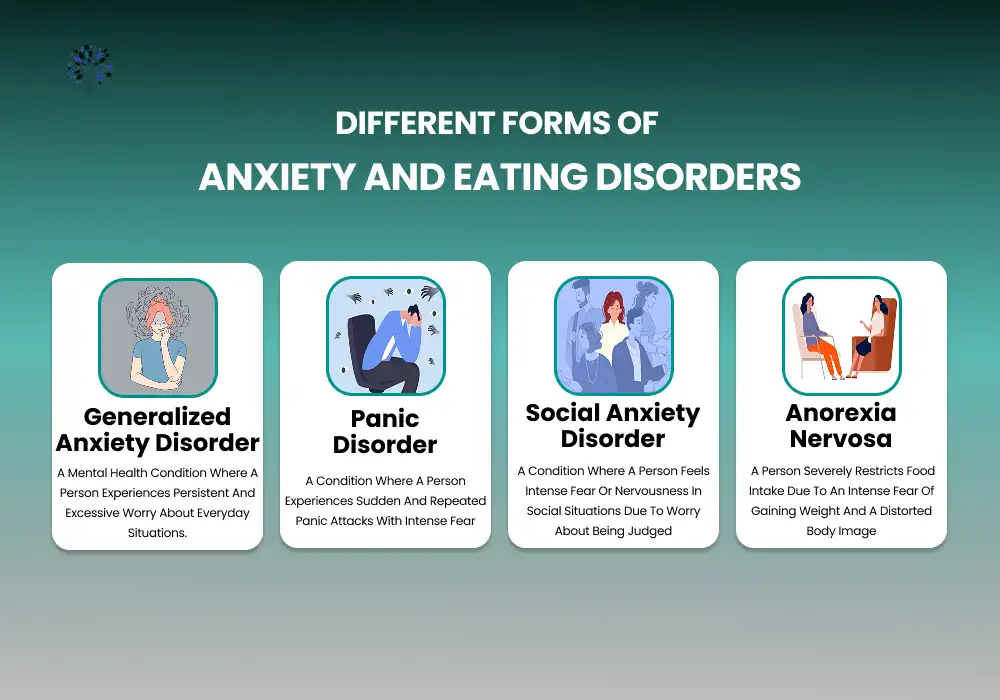
Generalized Anxiety Disorder (GAD) and Food Avoidance
GAD causes constant worry. It doesn’t switch off. This nonstop tension often settles in the stomach. Many people with GAD feel too nervous to eat. Meals get skipped. Appetite fades. Over time, this pattern can turn into a habit that’s hard to break without support.
Social Anxiety and Eating in Public
Social anxiety disorder makes people fear judgment. Eating in front of others can feel unbearable. Some people avoid restaurants. Others skip lunch at work. This isn’t pickiness. It’s fear. And it can quietly lead to irregular eating patterns or restrictive eating behavior over time.
Panic Disorder and Appetite Changes
Panic disorder brings sudden, intense fear. A racing heart. Shortness of breath. Nausea. These physical symptoms often strike around mealtimes, making food feel threatening instead of nourishing. Some people avoid eating before situations that might trigger panic. Others lose their appetite entirely during an episode.
Each of these conditions shows how deeply anxiety and eating disorders are connected. The type of anxiety a person experiences often shapes the type of eating problem they develop. That’s why identifying the specific anxiety disorder matters. It helps providers like Peniel Psychiatry build a treatment plan that actually fits, not a one-size-fits-all approach.
Recognizing the Signs: Anxiety, Eating Disorders, or Both?
Sometimes the signs are quiet. Other times, they’re impossible to miss. Here’s the short answer: watch for changes in mood, eating habits, and body signals; together, they often point to something deeper. Let’s look closer.
Emotional and Behavioral Red Flags
Anxiety and eating disorders both start in the mind before they show up anywhere else. Look for constant worry about food or weight. Obsessive thoughts about calories or control. A growing fear of judgment around meals.
Behavior often shifts too. Someone might skip meals without explanation. Or eat in secret. Or suddenly avoid foods they once enjoyed. Emotional eating and anxiety often travel together here; food becomes comfort during stress, then guilt follows right after.
Self-esteem tends to take a hit as well. Negative self-talk about appearance. Comparing their body to others. These aren’t small mood swings. They’re patterns worth paying attention to.
Physical Symptoms That Signal It’s Time to Act
The body speaks too, even when words don’t. Sudden weight changes, up or down, are a common signal. So is fatigue that doesn’t improve with rest.
Digestive issues often show up next. Stomach pain. Nausea. Irregular appetite that swings from one extreme to the other. These physical symptoms usually aren’t random. They’re often the body’s response to ongoing anxiety and eating disorder patterns working together.
Sleep can suffer too. So can concentration. When the body is under constant stress, everything else starts to wear down.
None of these signs alone means someone has an eating disorder or anxiety condition. But when several appear together, it’s worth taking seriously. Early recognition, followed by support from a provider like Peniel Psychiatry, can prevent things from getting harder to manage later.
What Causes Co-Occurring Anxiety and Eating Disorders?
Why do these two conditions show up together so often? Here’s the short answer: it’s rarely just one cause. Genetics, brain chemistry, and life experiences usually work together. Let’s break it down.
Genetic and Biological Risk Factors
Family history plays a real role. If a parent or sibling has struggled with anxiety or an eating disorder, the risk goes up. This isn’t guesswork; it’s biology.
Genes shape how the brain handles stress. They influence chemicals that control mood, hunger, and fear response. Some people are simply born with a nervous system that reacts more strongly to pressure.
This biological wiring can affect appetite too. It may explain why some people lose interest in food during stress, while others turn to stress-related eating habits instead. Neither response is a choice. It’s how their body is built to cope.
Environmental and Social Triggers
Biology sets the stage, but life experience often pulls the trigger. Stressful events can push someone toward anxiety, disordered eating, or both.
Social media plays a bigger role than most people realize. Constant exposure to unrealistic body standards can fuel negative body image, especially in teens and young adults. Cultural pressure around weight and appearance adds to that weight, quite literally.
Trauma matters too. So does bullying. A difficult childhood. A painful breakup. Job loss. These experiences don’t cause anxiety or eating disorders on their own, but they can act as the spark that lights a fuse already primed by genetics.
Understanding both the biological and environmental sides helps explain why treatment works best when it considers the whole person. That’s the approach providers like Peniel Psychiatry take: treating the root causes rather than just the symptoms.
Treatment Options for Anxiety and Eating Disorders in Texas and California
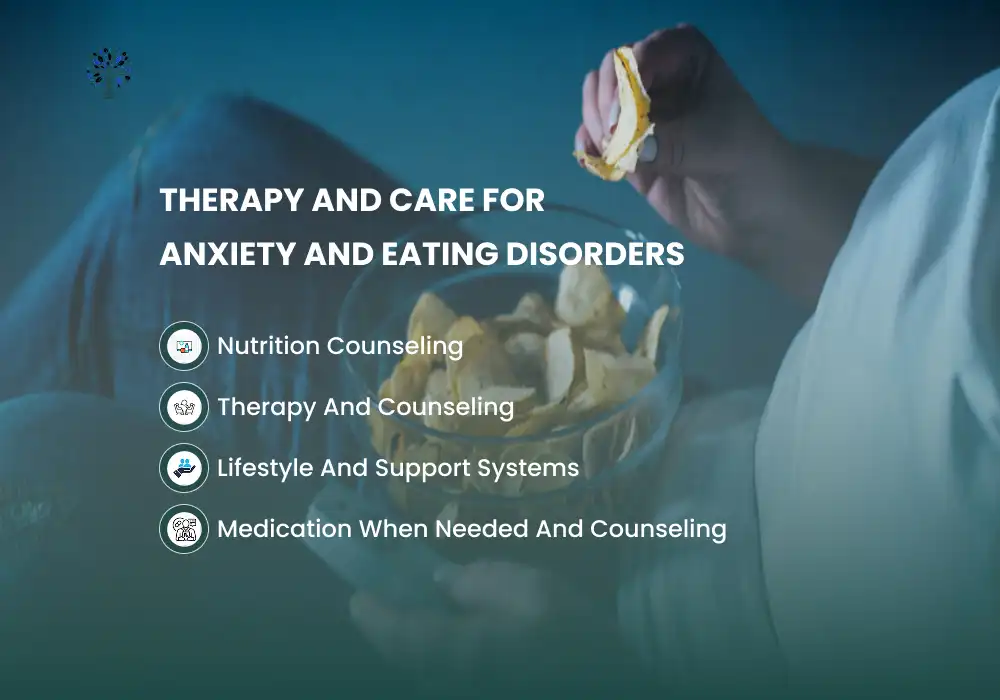
Good news first: both conditions respond well to treatment, especially when treated together. Here’s the short answer: therapy, medication, and nutrition support, combined, offer the strongest path to recovery. Here’s how each piece works.
Therapy Approaches (CBT, Family-Based Therapy)
Therapy is usually where healing starts. Cognitive Behavioral Therapy, or CBT, helps people notice unhelpful thought patterns around food, weight, and control. Then it teaches new ways to respond to them.
Family-based therapy can help too, especially for younger patients. It brings loved ones into the process. Family members learn how to support recovery at home, not just during appointments. This matters because anxiety and eating disorders don’t stay contained to therapy sessions; they show up at the dinner table, too.
Medication Management
Sometimes therapy alone isn’t enough, and that’s okay. Medication can help calm the nervous system and stabilize mood, especially when anxiety is intense or constant.
A psychiatric provider will closely examine each person’s symptoms. Anti-anxiety medication or other options may be part of the plan. The goal isn’t to mask symptoms. It’s to create enough stability so therapy and other treatment can actually take hold.
Nutrition Counseling and Support Groups Near Texas and California
Rebuilding a healthy relationship with food takes guidance. A nutrition counselor helps with that, teaching balanced eating without fear or guilt attached.
Support groups add another layer. Talking with others who understand the same struggles reduces isolation. It reminds people they’re not alone in this.
In Texas and California, Peniel Psychiatry brings these pieces together under one roof. Therapy, medication management, and nutrition guidance, all working as one coordinated plan, not scattered pieces left for the patient to manage alone.
When to Seek Help and How Peniel Psychiatry Can Support Recovery
When is it time to reach out? Here’s the short answer: don’t wait for a crisis. If anxiety or eating habits are affecting daily life, that’s reason enough. Let’s talk about what that looks like.
Warning Signs That Shouldn’t Be Ignored
Some signs are easy to brush off at first. A skipped meal here. A stressful week there. But patterns matter more than single moments.
Watch for persistent worry that won’t ease up. Panic attacks that keep happening. Obsessive thoughts about food, weight, or control that take up more and more mental space. Sudden weight changes are worth noting, as is fatigue that doesn’t improve with rest.
None of these signs need to be extreme to matter. If daily life feels harder because of anxiety or eating habits, that’s already a valid reason to ask for help. Waiting for things to get worse isn’t necessary, and it isn’t safer.
Booking an Appointment With a Texas and California-Based Provider
Reaching out doesn’t have to be complicated. Peniel Psychiatry, led by board-certified provider Kenny Adedayo, PMHNP-BC, offers a starting point that feels manageable rather than overwhelming.
The process usually begins with a conversation. What’s been happening. How long it’s been going on. What support might help most. From there, a treatment plan takes shape, one built around the person, not a generic checklist.
For anyone in Texas and California, or the greater Dallas-Fort Worth area, professional support is closer than it might feel right now. Taking that first step is often the hardest part. After that, recovery has room to begin.
Frequently Asked Questions (FAQs)
Can anxiety disorders actually cause eating disorders?
Yes, they can. Anxiety often shapes how a person relates to food through restrictive eating behavior, emotional eating, or loss of appetite. Over time, these patterns can develop into a full eating disorder if left unaddressed.
Which anxiety disorder is most closely linked to eating disorders?
Generalized Anxiety Disorder, social anxiety, and panic disorder are the three most commonly connected. Each affects appetite and eating behavior slightly differently, but all three can contribute to disordered eating over time.
Is it possible to have anxiety and an eating disorder at the same time?
Yes, this is actually very common. Many people experience both conditions together, since they share overlapping causes like perfectionism, stress sensitivity, and a need for control.
Can these conditions be treated successfully?
Yes. With the right combination of therapy, medication when needed, and nutrition support, most people see real improvement. Recovery isn’t instant, but it is absolutely possible with consistent, personalized care.