

Torn between a video call and a waiting room for your next therapy session?
therapy vs. in-person care: which one truly helps you feel better, faster? Research shows both formats work well for anxiety, depression, and ADHD, though therapy adds unmatched convenience and privacy, while in-person visits may suit more severe conditions.
This online mental health care vs traditional therapy comparison breaks down real outcomes, so you can choose confidently. Whether you value flexible scheduling, insurance coverage, or a familiar setting, understanding these differences helps you pick the path that fits your life, your comfort, and your treatment goals in Texas and California, and beyond.
What Is Therapy?
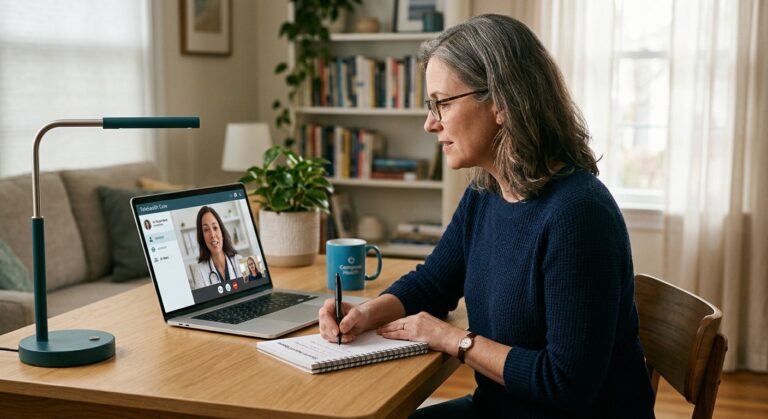
therapy means meeting with a mental health provider online. You do not visit an office. Instead, you connect through a secure, HIPAA-compliant video platform from your phone, tablet, or computer.
This type of remote psychiatric care works a lot like an in-person visit. Your provider still asks about your symptoms. They still listen closely. They still build a treatment plan around your life.
How a Session Works
First, you book an appointment online. Many patients get a same-day psychiatric appointment or one within 24 hours. Next, you join a video call at your scheduled time. No commute. No waiting room. Just you and your provider, talking through a private, confidential connection.
What Therapy Can Treat
online psychiatric care supports many conditions. This includes generalized anxiety disorder, ADHD, depression, PTSD, and social anxiety disorder. Providers can also handle medication management through these visits, adjusting prescriptions as needed.
For many people, this format feels easier. It fits real life. And it still delivers real, evidence-based care.
What Is In-Person Therapy?
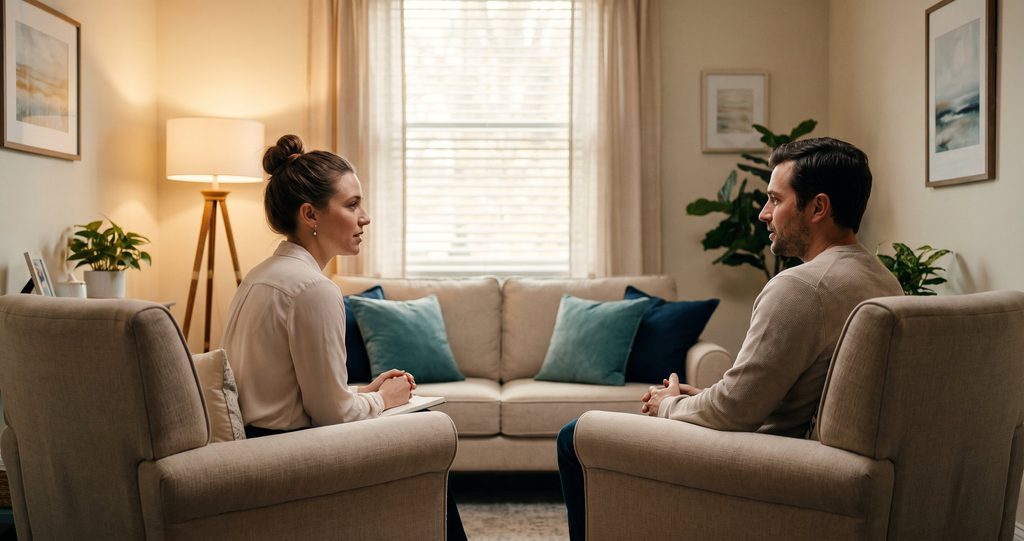
In-person therapy means visiting a provider face-to-face. You travel to an office, sit in a waiting room, and meet your provider in person for your session.
This traditional office therapy format has been the standard for decades. Many patients feel more connected when they can shake hands, read body language, and sit in the same room as their provider.
How an In-Person Visit Works
You schedule your appointment in advance. Then, on the day of your visit, you drive to the office, check in, and wait until your provider is ready. The session itself happens in a private room, often for 30 to 60 minutes.
What In-Person Therapy Can Treat
This format works well for the same conditions psychiatric care treats, including anxiety, depression, and PTSD. It can also be a better fit for severe cases, like psychosis or schizophrenia, where a provider may need to observe you more closely.
In-person visits offer structure. For some patients, that structure builds trust and comfort right from the first appointment.
Effectiveness: Does Therapy Work as Well?
This is the question most patients ask first. And the answer is reassuring. Research shows online psychiatric care is as effective as in-person care for many common conditions.
Studies on treatment outcomes have found similar results between video sessions and office visits. This holds true for generalized anxiety disorder, major depressive disorder, and other common concerns. Providers can still diagnose, monitor progress, and adjust treatment plans through a screen.
Why psychiatric care Performs So Well
A few things make this possible. First, evidence-based online psychiatric care relies on the same clinical tools used in person. Providers ask the same questions. They use the same assessments. They follow the same medical guidelines.
Second, continuity of care often improves with visits. Patients are less likely to miss appointments when they do not need to travel. This means fewer gaps in treatment, which supports better long-term outcomes.
Where the Research Gets Nuanced
therapy works especially well for anxiety, depression, and ADHD management. However, effectiveness can vary based on condition severity. Patients with complex or high-risk symptoms may need closer monitoring, something we will cover later in this guide.
Overall, most patients find that a secure online mental health care session delivers the same quality of psychiatric evaluation online as they would receive face-to-face. The format changes. The standard of care does not.
Convenience & Accessibility
For many patients, therapy truly shines here. online mental health care accessibility removes some of the biggest barriers to getting care.
No Commute, No Waiting Room
You do not need to drive across Texas and California or sit in a waiting room. Instead, you log in from home, work, or even your car. This saves time and reduces stress before your appointment even starts.
Built for Busy Lives
Flexible therapy scheduling makes psychiatric care a strong fit for working parents, caregivers, and anyone juggling a packed calendar. At-home therapy sessions mean you can fit an appointment into a lunch break or after the kids go to bed.
Reaching Patients Who Need It Most
Rural mental health access has long been a challenge in Texas and California. Many towns simply do not have enough psychiatric providers nearby. psychiatric care closes that gap. Patients across the state can now connect with a board-certified provider without a long drive.
This convenience also helps new parents managing postpartum depression, who may find it hard to leave home for appointments. therapy meets patients where they already are, both physically and in their daily routine.
Privacy & Comfort
Comfort matters just as much as clinical care. therapy offers a private therapy setting that many patients find easier to open up in.
A Familiar Space Can Ease Anxiety
Talking through personal struggles is hard enough. Doing it in an unfamiliar office can make it harder. With visits, patients stay in the comfort of home, whether that means their bedroom, living room, or a quiet car. This familiar setting often helps people relax and speak more openly.
Less Stigma, More Openness
Some patients worry about being seen walking into a psychiatric office. psychiatric care offers reduced-stigma therapy, since there is no waiting room and no risk of running into someone you know. This confidential psychiatric care format can feel safer for many people.
Especially Helpful for Certain Conditions
This privacy matters most for patients managing social anxiety disorder, who may already feel uneasy in public or unfamiliar spaces. It also benefits those working through PTSD, where a sense of control over their environment can make sessions feel safer and more manageable.
Cost & Insurance Comparison
Cost plays a real role in this decision. Thankfully, both and in-person care can fit different budgets, depending on your situation.
How Insurance Coverage Compares
Most major insurance plans now cover online mental health care, just like in-person visits. Peniel Psychiatry accepts Aetna, Cigna, Optum, and United Healthcare for appointments. This means many patients pay the same copay, whether they choose a video session or an office visit.
Cash-Pay Options
For patients without insurance, cash-pay psychiatric care is available for both formats. However, psychiatric care often comes with lower overhead costs. Fewer office expenses can sometimes mean more affordable mental health treatment for patients paying out of pocket.
What to Check Before Booking
Every plan works differently. Before your first appointment, confirm your specific copay and therapy details with your provider’s office. This avoids surprise costs and helps you plan your treatment with confidence.
In most cases, cost should not be the deciding factor between and in-person care. Both options are accessible, and your provider’s team can walk you through your specific coverage.
When In-Person Might Be the Better Choice

therapy works well for most patients. Still, some situations call for in-person psychiatric care instead.
Severe or High-Risk Conditions
Patients managing psychosis or schizophrenia often benefit from closer, in-person monitoring. A provider may need to observe physical symptoms, behavior changes, or medication side effects that are harder to catch through a screen.
Crisis Situations
If someone is in immediate danger or facing a mental health crisis, in-person care or emergency services offer faster, hands-on support. visits are not designed to replace emergency intervention.
Patients Who Need Physical Exams
Some psychiatric evaluations require physical exams or lab work. In these cases, an in-office visit makes it easier for providers to gather complete health information alongside your mental health history.
Comfort with Technology
Not everyone feels comfortable using video platforms. For patients who prefer face-to-face conversation, or who find technology stressful, traditional office therapy may simply feel more natural and less distracting.
Choosing in-person care is not a step backward. For certain conditions and comfort levels, it is the safer, more supportive choice.
How to Decide: A Quick Checklist
Still unsure which option fits you best? Ask yourself these questions before booking your appointment.
Consider Your Condition
• Are your symptoms mild to moderate, like everyday anxiety or low mood?
• Do you have a more severe condition that may need closer, in-person monitoring?
Consider Your Lifestyle
• Does flexible therapy scheduling matter more to you than a set office visit?
• Do you struggle to fit appointments into a busy week?
Consider Your Comfort
• Do you feel calmer talking from home, or do you prefer face-to-face conversation?
• Does privacy or reduced stigma of therapy influence your choice?
Consider Practical Details
• Is rural mental health access a challenge where you live?
• Does your insurance offer the same coverage for both formats?
There is no wrong answer here. Many patients even switch between formats over time, based on what feels right at each stage of treatment.
Why Texans Are Choosing psychiatric care
Across Texas and California and the rest of Texas, more patients are choosing psychiatric care every year. The reasons are simple, and they make a real difference in daily life.
Fast, Accessible Appointments
Many patients want a same-day psychiatric appointment without weeks of waiting. psychiatric care often makes this possible, connecting Texans with a provider in as little as 24 hours.
Board-Certified, Personal Care
Quality matters just as much as speed. At Peniel Psychiatry, patients work directly with Kenny Adedayo, a board-certified Psychiatric Nurse Practitioner. She brings the same evidence-based online psychiatric care standards used in top in-person practices, just delivered through a secure, convenient video visit.
Built for Real Texas Life
Whether someone lives in the heart of Texas and California or hours away in a rural community, psychiatric care removes the barrier of distance. Patients no longer have to choose between quality psychiatric care and a long drive.
This combination of speed, access, and trusted care is why so many Texans now see therapy as their first choice, not a backup plan.
Frequently Asked Questions
Is therapy covered by insurance in Texas and California?
Yes. Most major insurance plans offer insurance-covered online mental health care, including Aetna, Cigna, Optum, and United Healthcare. Coverage is often the same as an in-person psychiatric visit.
Can I switch between and in-person care?
Absolutely. Many patients move between formats depending on their needs at the time. Your provider can help you decide what fits best as your treatment progresses.
Is online psychiatric care as effective as in-person visits?
Yes. Research shows online psychiatric care effectiveness matches in-person care for conditions like anxiety, depression, and ADHD. Providers use the same evidence-based tools in both formats.
How soon can I get a appointment in Texas and California?
Many patients get a same-day psychiatric appointment or one within 24 hours. psychiatric care often means faster access than traditional office scheduling allows.
Conclusion
therapy vs in person care is not really about which one is better. It is about which one fits you.
Both formats offer real, evidence-based treatment for anxiety, depression, ADHD, and more. psychiatric care brings convenience, privacy, and faster access, while in-person visits offer extra support for severe or high-risk conditions. The right choice depends on your comfort, your schedule, and your specific needs.
If you are ready to take the next step, Peniel Psychiatry makes it simple. Whether you prefer a secure online mental health care session or an in-person visit, our board-certified provider is here to help. Contact us today to schedule your appointment and start your path toward better mental health.