
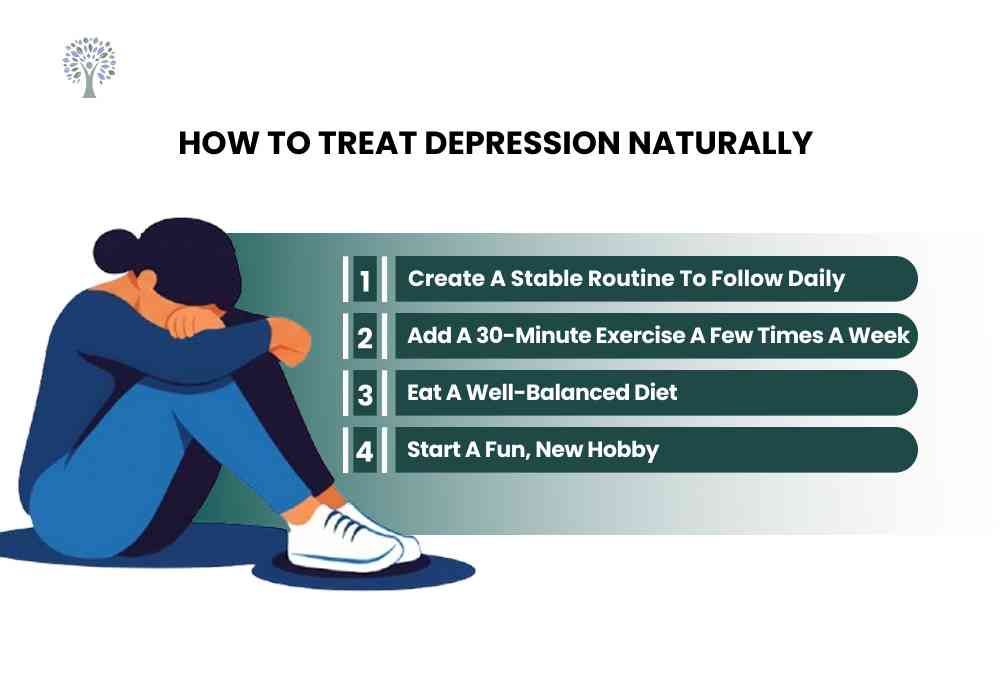
How to Treat Depression Naturally is a question many people ask when they want to feel better without relying only on medication. Depression is more than sadness; it affects your thoughts, body, and daily life. Natural methods like improving sleep, eating brain-supporting foods, moving your body, and practicing mindfulness can help lift mood and reduce stress.
While these steps cannot replace professional care, they can support your healing journey and improve overall mental health. This guide will show simple, evidence-based ways to manage symptoms, build healthy habits, and understand depression in a way that feels realistic, gentle, and practical for everyday life.
What Depression Feels Like
Depression is more than feeling sad. It can make life feel heavy, dull, or exhausting. People with depression often notice changes in their thoughts, body, and daily habits. It can show up in different ways, and everyone experiences it a little differently. Understanding these signs is vital if you want to manage your mental health naturally or seek the proper support.
Emotional and Mental Signs
You might feel hopeless, anxious, or empty most of the time. Small tasks can feel overwhelming, and you may lose interest in activities you once enjoyed. Some people feel irritable or frustrated without an apparent reason. Thoughts can become negative or self-critical, making it hard to see the positives in life. Difficulty concentrating or making decisions is also common.
Depression often affects the body too. You might notice changes in sleep, appetite, or energy. Some people feel aches, headaches, or digestive issues without a clear cause. Low energy and fatigue can make moving your body or doing daily routines feel more complicated than usual.
Sadness vs. Clinical Depression
Feeling sad occasionally is normal, but depression lasts longer and affects daily life. It is persistent, often lasting for weeks or months. It can interfere with work, relationships, and simple routines. Recognizing these signs early helps you combine natural methods such as better sleep, healthy eating, and mindfulness with professional care, if needed.
Why Many People Look for Natural Ways to Feel Better
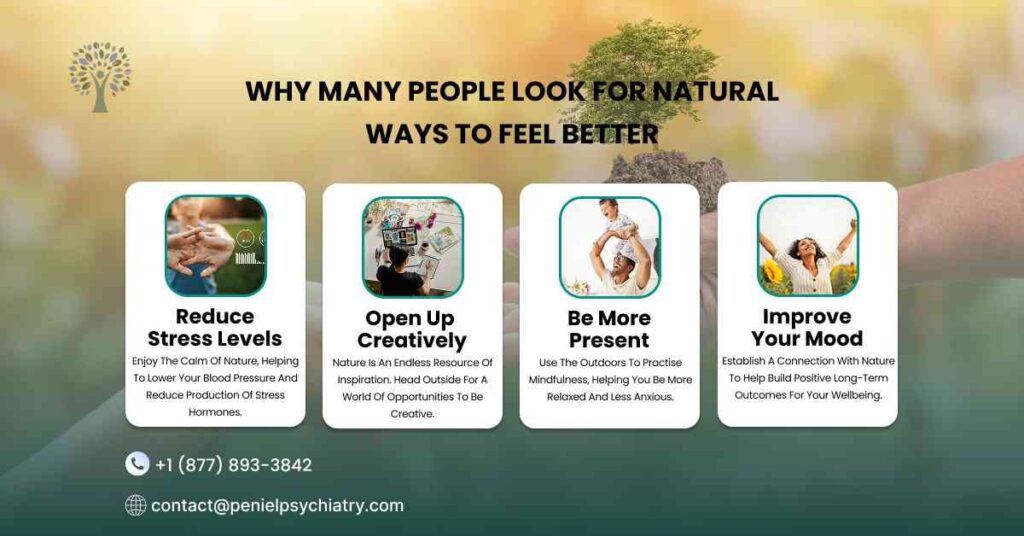
Many people want to improve their mood without relying only on medication. Natural methods can be gentle, easy to incorporate into daily life, and supportive of overall mental health. Activities like moving your body, eating foods that support brain health, getting sunlight, and practicing mindfulness can help reduce stress and lift mood.
Avoiding Over-Reliance on Medication
Some people worry about side effects from medication or want to try lifestyle changes first. Natural approaches can provide a sense of control and complement professional care. They also help improve habits like sleep, diet, and daily routines, which directly affect mental health.
Natural methods are often simple to start. A short walk, better sleep habits, or small diet changes can make a noticeable difference over time. They are sustainable, low-risk, and can be done alongside therapy or medical treatment. People find that these steps not only help with depression but also boost overall energy and mood.
It’s important to remember that natural methods take time. They are supportive, not a replacement for professional treatment if depression is severe. Using natural strategies alongside guidance from mental health professionals can create a balanced and practical approach to improving mood and overall well-being.
When You Should Not Rely on Natural Treatment Alone
Natural methods can help lift mood and support mental health. They improve sleep, reduce stress, and encourage healthy daily habits. However, there are times when natural strategies alone are not enough. Severe depression can affect thoughts, feelings, and daily life. Recognizing when to seek professional support is crucial for safety and effective care.
- Signs of Severe Depression: Severe depression goes beyond feeling sad or tired. You may notice persistent hopelessness, extreme fatigue, or constant negative thoughts. Even simple daily tasks like getting out of bed, eating, or going to work can feel impossible. These signs show that professional help is needed in addition to natural methods.
- Thoughts of Self-Harm: If you ever have thoughts of hurting yourself, it is urgent to reach out to a mental health professional immediately. Natural strategies alone cannot address these risks. Therapists, counselors, or doctors can provide safety, support, and treatment plans to protect your well-being.
- When Daily Life Is Affected: Depression that interferes with relationships, work, or responsibilities is a clear sign that professional support is necessary. Natural methods like exercise, better sleep, or mindfulness are helpful, but they work best when combined with guidance from trained professionals.
- Why Professional Support Matters: Professional care provides proper assessment, monitoring, and treatment options. Therapy, counseling, or medication may be recommended to manage severe symptoms. Combining natural approaches with professional support often yields better, longer-lasting results.
Seeking help is a sign of strength, not failure. You can continue using natural methods while also getting support from trained professionals. Together, these strategies create a safer, more effective way to manage depression and improve your overall mental health.
Natural Ways to Treat Depression (Evidence-Based)
Natural methods can support your mental health and help improve your mood. They are safe, practical, and easy to include in daily life. While they cannot replace professional care for severe depression, combining these approaches with therapy or medical guidance often works best. Evidence shows that simple lifestyle changes like sleep, diet, movement, and stress management can make a noticeable difference over time.
Improve Sleep First
Sleep and mental health are closely connected. Poor sleep can worsen depression and make it harder to manage emotions. Even minor improvements in sleep habits can help lift your mood.
Start by keeping a consistent sleep schedule. Go to bed and wake up at the same time every day. Avoid screens at least an hour before bed, and create a calm, quiet environment for rest. Short naps are okay, but avoid long or late naps that can interfere with nighttime sleep.
Eat Foods That Support Mental Health
What you eat can affect how you feel. Foods rich in omega-3 fatty acids, whole grains, fruits, and vegetables support brain health and mood. On the other hand, highly processed foods, sugary drinks, or excessive caffeine may worsen symptoms. Simple changes, like adding leafy greens or nuts to meals, can make a noticeable difference over time.
Move Your Body Regularly
Physical activity boosts mood naturally. Exercise increases endorphins and improves energy. You don’t need intense workouts; short walks, stretching, or light movement are effective. The key is consistency, not intensity. Even ten minutes of movement can help reduce stress and support mental health.
Get Enough Sunlight and Vitamin D
Sunlight affects mood and energy. Spending time outdoors, even for a short walk, helps the body produce vitamin D and improves mental well-being. If you live most of the day, try opening windows or stepping outside during daylight. Safe sun exposure is enough to support mood without overdoing it.
Practice Mindfulness and Breathing
Stress can worsen depression. Simple mindfulness practices, such as slow breathing or brief meditation, can help calm the mind. You don’t need to follow a strict routine; just a few minutes of focused breathing or noticing your surroundings can improve mood and reduce anxiety.
Reduce Daily Stress Where Possible
Daily stress adds to depression. Identify minor stressors and set gentle boundaries. Take breaks, rest, and avoid overloading yourself. Rest is not laziness; it helps your body and mind recover, making other natural strategies more effective.
Natural Supplements for Depression (What to Know)
Some people wonder if supplements can help improve mood and mental health. Specific vitamins, minerals, and herbal products may support brain function and help reduce symptoms of mild depression. However, supplements are not magic solutions. They work best when combined with natural lifestyle changes like better sleep, healthy eating, movement, and stress reduction.
Common Supplements People Ask About
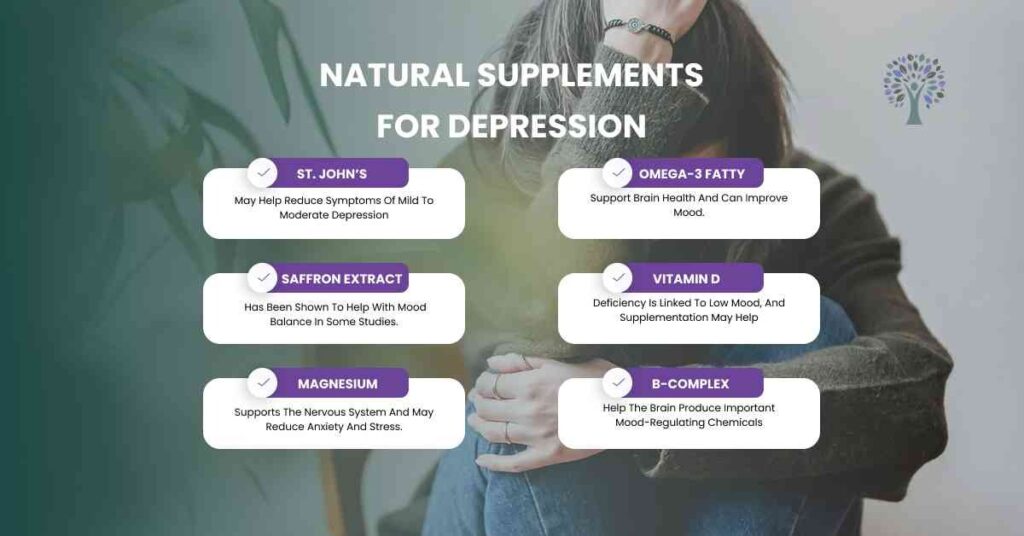
Omega-3 fatty acids, found in fish or flaxseed, may support brain health. Vitamin D can help lift mood, especially if you have limited sunlight exposure. Magnesium, B vitamins, and specific herbal options, such as St. John’s Wort, are also commonly used. Each of these can support mental health, but effects vary from person to person.
Why Supplements Are Not Enough Alone
Supplements cannot replace therapy, professional guidance, or prescribed medication when it’s needed. They may help improve symptoms, but relying only on supplements can delay proper care. Depression is complex, and safe, effective treatment often requires a combination of approaches.
Always talk with a doctor or pharmacist before starting any supplement. Some can interact with medications or have side effects. Proper dosing and professional advice are essential for safety and effectiveness.
Combining Supplements With Professional Guidance
When used carefully, supplements can be a helpful addition to therapy or lifestyle changes. They can support mood and mental health naturally, but the best results come from combining them with guidance from mental health professionals. This ensures that both your safety and overall well-being are protected.
Therapy and Natural Healing Can Work Together
Combining therapy with natural methods can improve mood and mental health more effectively than using either approach alone. Talk therapy helps you understand your thoughts and emotions, while natural strategies like exercise, better sleep, and mindfulness support your overall well-being. Together, these approaches create a balanced and practical way to manage depression.
How Talk Therapy Supports Natural Healing
Therapy provides guidance, coping strategies, and emotional support. It helps you notice patterns in your thoughts and behaviors that may worsen depression. While natural methods can lift mood and reduce stress, therapy gives a structured way to address underlying causes. Even short sessions can make a noticeable difference over time.
Benefits of Therapy Even Without Medication
You don’t always need medication to see improvements. Therapy alone can help you develop healthy routines, reduce stress, and manage symptoms. Using therapy alongside natural methods often accelerates progress and gives you tools to handle challenges more effectively.
Online vs In-Person Options
Both online and in-person therapy can be effective. Online therapy offers convenience and accessibility, while in-person sessions provide direct interaction. Choosing the correct format depends on your comfort, schedule, and support needs.
Seeking therapy is a normal step for improving mental health. Many people combine it with lifestyle changes and supplements for the best results. Therapy is not a sign of weakness; it’s a supportive tool that complements natural strategies and professional care.
How Long Does Natural Treatment Take to Work?
Natural methods for depression can be very effective, but they take time, unlike medication, which may show quicker effects. Lifestyle changes, healthy habits, and mindfulness take time to work. It’s essential to have realistic expectations and notice minor improvements along the way.
Why Progress Is Gradual
Changing sleep patterns, eating better, moving your body, and reducing stress affect your body and mind slowly. The brain and body need time to adjust to new routines. Improvement may not happen immediately, but small changes accumulate over days and weeks.
Early signs of progress can be subtle. You might feel more energetic, notice better concentration, or have brief moments of calm or enjoyment. Even small improvements are meaningful and indicate that your efforts are making a difference.
Signs Something Is Helping
Consistent habits often lead to better sleep, reduced stress, and improved mood. You may find daily tasks easier or feel more motivated to move your body. Positive changes in thought patterns or emotional responses are also signs that natural methods are supporting mental health.
If you don’t notice any improvement after several weeks or if your symptoms worsen, it’s a signal to consult a mental health professional. Combining natural strategies with therapy or medical care can provide the support needed for lasting results.
Supporting Someone With Depression Naturally
Helping a loved one with depression can feel challenging. You may want to make them feel better, but the most effective support is gentle, consistent, and informed. Natural methods, combined with professional care, can provide comfort, structure, and hope. Understanding how to support someone without taking over is key to promoting their mental health safely.

How to Help Without Fixing
It’s important to remember that you cannot “fix” depression. Encouraging daily routines, healthy habits, and natural strategies can help. Offer small suggestions, such as going for a walk, preparing a healthy meal, or practicing mindfulness together. Simple support shows you care and helps them feel less isolated.
What to Say and What Not to Say
Supportive language matters. Say things like, “I’m here for you,” or “Would you like to take a short walk together?” Avoid phrases that minimize feelings, like “Just cheer up” or “It’s all in your head.” Listening without judgment is one of the most powerful ways to help.
Encouraging Professional Support
Natural methods can be helpful, but professional guidance is often necessary for lasting improvement. Gently suggest booking an appointment with a mental health professional if symptoms persist or worsen. You can offer to help them find a therapist, counselor, or psychiatrist, or even assist in scheduling the visit. Combining therapy with natural strategies often provides the safest and most effective support.
Final Thoughts
Natural methods can help support mood and mental health, but they work best with professional care. Small steps like improving sleep, eating healthy, moving your body, and practicing mindfulness can gradually lift your mood.
Depression is not a personal failure. Everyone benefits from support, and combining natural strategies with therapy or guidance from a mental health professional is the safest and most effective approach.
Even tiny daily habits, like a short walk or a few minutes of mindful breathing, make a difference over time. If symptoms are severe or persistent, booking an appointment with a mental health professional ensures proper care.
By blending natural methods and professional support, you can steadily improve mental health and daily well-being.
Frequently Asked Questions (FAQs)
Can Depression Go Away Naturally?
Mild depression may improve with consistent natural methods like healthy sleep, exercise, mindful breathing, and a balanced diet. However, persistent or severe depression usually requires professional support. Combining natural strategies with therapy or guidance from a mental health professional gives the best results.
Is Natural Treatment Safe?
Most natural methods, such as movement, sleep routines, mindfulness, and stress reduction, are safe for most people. Supplements can also help, but should be used under professional guidance to avoid interactions or side effects. Natural strategies are supportive, not a replacement for professional care when needed.
Can I Stop Medication If I Feel Better?
Never stop prescribed medication without consulting your doctor. Even if natural methods improve mood, abrupt changes can worsen symptoms or create risks. A healthcare professional can guide gradual, safe adjustments while you continue natural strategies.
Does Natural Treatment Work for Everyone?
Natural methods help many people, but effectiveness varies. Factors like severity of depression, lifestyle, and individual biology influence results. Combining natural approaches with therapy often yields better outcomes than relying on a single method.
Can Therapy Help Without Medication?
Yes. Talk therapy, counseling, and behavioral support can improve mood, reduce stress, and support mental health even without medication. When combined with natural strategies like movement, healthy habits, and mindfulness, therapy strengthens overall well-being.